Twist-On Wire Connectors
Official Store Deal
Expert Analysis Overview
Essential Electrical Connections: A Certified Electrician's Perspective
Twist-on wire connectors are fundamental electrical components designed for securely joining multiple conductors within a circuit. These specific connectors, available in a range of sizes, offer a reliable, insulated connection method crucial for both residential and commercial wiring applications. Their design prioritizes ease of use and long-term electrical integrity. Proper installation is paramount.
Material Science and Structural Integrity
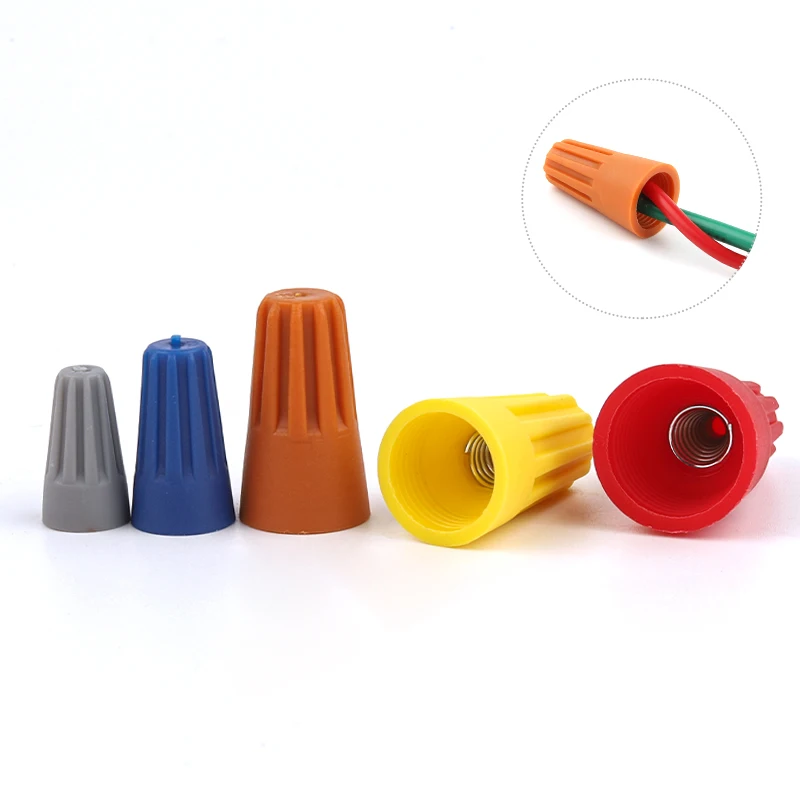
The connectors feature a robust, fluted thermoplastic housing. This exterior provides excellent insulation properties, preventing accidental contact with live conductors. Internally, an angle steel spring forms the core of the connection mechanism. This spring is critical.
When twisted onto stripped conductors, the internal spring compresses and threads onto the wires, creating a tight, low-resistance contact. The ribbed exterior enhances grip during installation, even when hands are gloved or slightly oily. This tactile feedback confirms proper engagement. Unlike cheaper, brittle plastic alternatives that can crack under the torque required for a secure connection, these connectors maintain their structural integrity. The internal spring mechanism offers superior vibration resistance compared to simple crimp sleeves, which can loosen over time. This is a significant upgrade for connection longevity.
Precision in Wire Compatibility and Gauge Management
The product offers a comprehensive range of sizes, from P1 to P6, each meticulously designed for specific wire gauges. The P1 model accommodates 0.5-1.0 mm² (22-18 AWG) wires, while the P6 handles larger 4.0-6.0 mm² (12-10 AWG) conductors. This precise sizing is not merely a convenience; it is a safety imperative. Using the correct connector for the wire gauge prevents loose connections, which are a primary cause of electrical arcing and potential fires. The table clearly delineates these specifications. Adherence to these guidelines ensures optimal electrical performance.
Selecting the appropriate connector size is a non-negotiable step in any wiring project. An undersized connector will not adequately secure the wires, leading to intermittent connections or overheating. Conversely, an oversized connector may not provide sufficient grip, resulting in a similar failure mode. The clear labeling and color-coding, such as grey for P1 and red for P6, facilitate quick identification and reduce the margin for error on the job site. This systematic approach streamlines installation. Imagine working in a dimly lit junction box; the color coding becomes invaluable for rapid selection. This attention to detail significantly improves workflow efficiency.
Compared to generic, unrated connectors, these provide a clear, verifiable compatibility range. This transparency allows electricians to confidently select the right component, ensuring compliance with electrical codes. The rated voltage, ranging from 300V for smaller connectors to 600V-1000V for larger ones, further underscores their suitability for various circuit demands. This broad applicability is a key advantage.
The Installation Protocol: Ensuring Secure Connections
The installation process is straightforward, yet demands precision to guarantee a safe and lasting connection. The first step involves stripping the wire insulation to approximately 9mm. This specific length ensures maximum contact with the internal spring without exposing excess bare wire. Exposed wire is a hazard.
Next, the naked wires are tightened and merged, ideally by pre-twisting solid conductors or aligning stranded wires. This pre-twisting creates a more cohesive bundle for the connector to grip. The connector is then inserted over the prepared wires and rotated clockwise. This rotational action engages the internal spring, which then threads onto and tightly twists the conductors together. A firm, continuous twist is essential. The connection is complete when the connector is snug and the wires are visibly twisted within. This method creates a mechanically sound and electrically continuous joint. Unlike relying solely on electrical tape, which offers no mechanical strength, these connectors provide both insulation and structural integrity. They are a superior solution.
This four-step process, when followed diligently, minimizes the risk of loose connections. Loose connections generate heat, which can degrade insulation and lead to circuit failure or fire. The reusability aspect, where connectors can be detached and reinstalled, offers flexibility during modifications or troubleshooting. This feature reduces material waste. It also saves time on site. This is a practical benefit for electricians who often need to make temporary connections or adjust existing wiring. The ability to reuse them adds significant value over the product's lifespan.
Electrical Performance and Safety Compliance
These connectors are rated for significant voltage applications, with smaller models handling 300V and larger ones rated for 600V-1000V. These ratings are critical indicators of their dielectric strength and ability to safely contain electrical potential. The robust insulation prevents current leakage and short circuits. Maintaining circuit integrity is vital.
Good conductivity is directly facilitated by the angle steel spring. This spring ensures a consistent, low-resistance path for current flow. A poor connection point can introduce resistance, leading to voltage drop and heat generation. The anti-loosening design of the spring mechanism is a key safety feature, preventing connections from degrading due to vibration or thermal cycling. This stability is crucial for long-term reliability. Imagine a critical circuit in an industrial setting; a loose connection could lead to costly downtime or equipment damage. These connectors mitigate such risks.
Compared to older methods like soldering, which can be time-consuming and require specialized tools, twist-on connectors offer a quick and reliable alternative for many applications. While soldering provides a permanent bond, twist-ons are often preferred for their speed and ease of inspection. They meet the demands of modern electrical installations. This makes them a staple in any electrician's toolkit.
Long-Term Value and Operational Efficiency
Investing in a quality set of wire connectors like these translates into significant long-term value. The durability of the thermoplastic housing and the robust internal spring ensure that connections remain secure for years. This reduces the need for costly callbacks or repairs due to connection failures. The initial cost is minimal. The long-term savings are substantial.
The color-coding system not only aids in initial installation but also simplifies future troubleshooting and maintenance. An electrician can quickly identify the appropriate wire gauge connected, speeding up diagnostic work. This organizational benefit is often overlooked but contributes significantly to overall project efficiency. The ability to detach and reuse connectors further enhances their value proposition, reducing waste and providing flexibility. This is a sustainable practice.
Picture a scenario where a new appliance needs to be wired into an existing circuit. With these reliable connectors, the process is quick, safe, and efficient, minimizing disruption. The peace of mind that comes from knowing your electrical connections are secure and compliant with safety standards is invaluable. These connectors are not just components; they are a commitment to electrical safety and reliability in every installation. They ensure peace of mind.
Secure and Compliant Wiring Solutions
These twist-on wire connectors are an indispensable tool for any electrician or DIY enthusiast tackling electrical wiring. Their robust construction, precise wire compatibility, and straightforward installation process ensure safe and reliable connections. The color-coded sizing system simplifies selection, while the internal steel spring guarantees a tight, anti-loosening grip. Rated for various voltages, these connectors provide a dependable solution for preventing electrical hazards and maintaining circuit integrity. They are a cornerstone of safe electrical practice.