Under-Surface Smart Dimmer Switch
Official Store Deal
Expert Analysis Overview
The Under-Surface Smart Dimmer Switch is an ingenious capacitive control module engineered for seamless integration into smart home lighting systems, targeting enthusiasts who prioritize discreet aesthetics and responsive interaction. Unlike conventional switches that necessitate visible mounting or invasive modifications, this device operates entirely from behind surfaces, making it an ideal choice for minimalist designs and sophisticated automation projects.
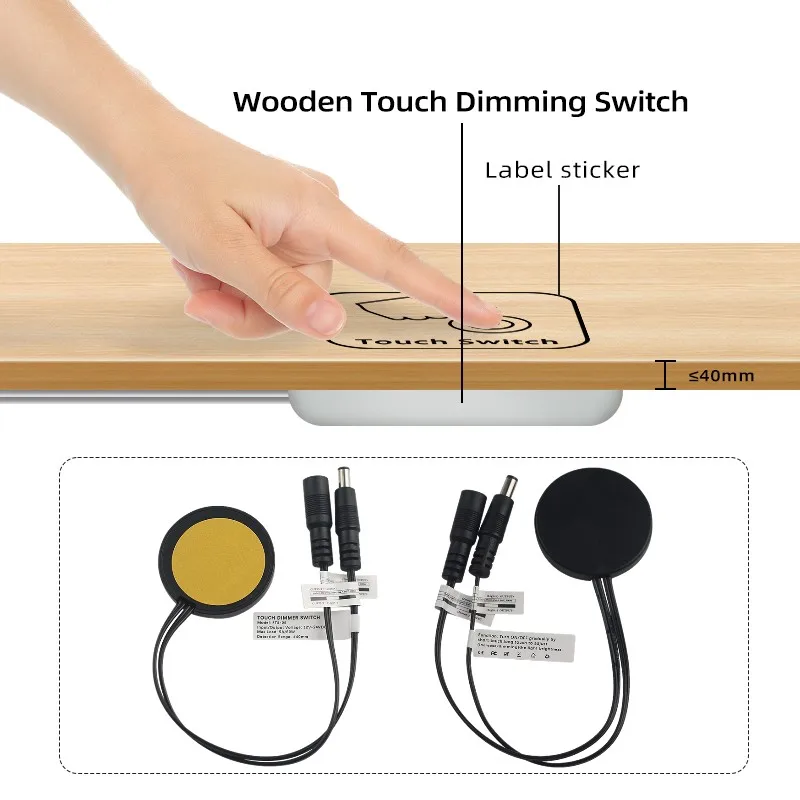
The core of this module's functionality lies in its advanced capacitive sensing technology. This allows the switch to detect human touch through non-metallic materials, specifically wood, up to a thickness of 40mm. The design relies on changes in the electrical field, registering a touch without physical contact with the active component. This is a significant departure from mechanical buttons.
Compared to simple pressure switches, capacitive sensors offer enhanced durability. They contain no moving parts, minimizing wear and tear over time. This extends the operational lifespan considerably, reducing maintenance requirements in high-use areas. The system simply works.
Imagine a kitchen cabinet light that activates with a mere touch to the underside of the counter. This eliminates visible switches, maintaining clean lines and a modern aesthetic. The provided label sticker helps users identify the precise touch point, ensuring intuitive operation even when the switch itself is hidden.
Installation of the Under-Surface Smart Dimmer Switch is straightforward, designed for integration into existing DC 12V-24V LED setups. The module features standard DC barrel connectors, ensuring compatibility with a wide array of LED strips and power adapters. Its compact form factor, measuring 48x48x7mm, allows for discreet placement behind cabinet panels, drawers, or desk surfaces. This small footprint is crucial.
The process involves mounting the sensor on the underside of the chosen surface, aligning it with the desired touch point. The unit adheres securely, often with double-sided tape or a small mounting bracket, ensuring stable performance. The 20cm cable length provides sufficient flexibility for connecting to nearby power sources and LED strips.
Compared to installing traditional wall-mounted switches that require cutting into drywall and running electrical conduit, this module offers a non-destructive alternative. It is perfect for rental properties or custom furniture where permanent modifications are undesirable. The ease of installation saves significant time and effort.
The switch supports a broad input voltage range of 12V to 24V DC. This versatility makes it compatible with most low-voltage LED lighting systems, from under-cabinet strips to wardrobe illumination. The ability to handle both common voltages simplifies inventory and integration for installers and DIY enthusiasts alike. Compatibility is key.
This wide voltage range means the switch can be integrated into diverse smart home lighting projects without requiring specific voltage converters for the switch itself. It directly interfaces with the power supply of your LED setup. This streamlines the overall system architecture, reducing potential points of failure.
Many generic LED switches are limited to a single voltage. This module's dual-voltage capability offers a distinct advantage, providing greater flexibility. It ensures robust performance across different power configurations, whether a small 12V accent light or a larger 24V task lighting array.
The module is rated for a maximum current of 5A, translating to a substantial power output of 60W at 12V and 120W at 24V. This capacity allows it to control extensive lengths of LED strip lighting or multiple fixtures from a single switch. High power handling is essential for comprehensive lighting solutions.
For a typical LED strip consuming around 5-10W per meter, this switch can comfortably manage 6 to 12 meters of lighting at 12V, or even more at 24V. This makes it suitable for illuminating entire cabinet runs, long shelving units, or even small room accents. The robust current handling prevents premature failure from overload.
Unlike many low-cost switches that often have limited current ratings, this module's 5A capacity positions it as a more capable component for serious lighting projects. It provides ample headroom for expansion, allowing users to add more LED segments without concerns about exceeding the switch's electrical limits. This ensures system stability.
The switch unit itself features a compact, circular design with a matte black or white finish, depending on the chosen variant. The casing feels dense and well-constructed, suggesting a durable ABS plastic or similar composite. The smooth cable sheathing indicates good insulation and flexibility. This build quality is reassuring.
The robust construction protects the internal electronics from minor impacts and environmental factors, crucial for a component often installed in less accessible or protected areas. The connectors exhibit a firm fit, minimizing accidental disconnections. This attention to detail contributes to overall system reliability.
Compared to flimsy, unsealed switches, the solid tactile impression of this module suggests a longer service life. The materials chosen are appropriate for its intended application within furniture, where discreetness and resilience are paramount. It feels like a premium component.
Response latency is critical for a pleasant user experience in home automation. This capacitive touch switch demonstrates minimal delay between touch input and light activation/dimming. The instantaneous feedback creates a natural and intuitive interaction. Fast response is key.
In practical use, a quick tap instantly toggles the light, while a sustained touch smoothly adjusts brightness. The dimming curve appears consistent and flicker-free, providing granular control over illumination levels. This responsiveness is vital for creating the desired ambiance in any space.
Poorly designed touch switches can suffer from noticeable lag or inconsistent dimming. This module, however, performs comparably to higher-end dedicated smart lighting controllers, offering a fluid and satisfying interaction. It seamlessly integrates into daily routines without frustration. The user experience is paramount.
While this switch is a standalone component, its simple DC input/output makes it a prime candidate for integration into more complex home assistant setups. The direct control over LED power allows for local control. This is a fundamental principle for reliable smart homes, as it minimizes reliance on cloud services. Local control offers resilience.
By pairing this switch with a smart relay or a low-voltage smart dimmer module (e.g., a Zigbee or Z-Wave compatible device), the physical touch point can trigger broader automation routines. Imagine a touch on the cabinet also activating a smart speaker or changing the room's scene. This expands its utility significantly. It becomes a versatile input.
Unlike proprietary smart switches that lock users into specific ecosystems, this module's open electrical interface provides unparalleled flexibility. Home automation engineers can easily incorporate it into platforms like Home Assistant, OpenHAB, or Node-RED, leveraging its physical input for virtually any desired action. The possibilities are vast.
This touch switch acts as an excellent physical interface for expanding an existing smart home ecosystem. Its ability to penetrate surfaces means it can be placed in locations where traditional smart buttons would look out of place or be impractical. It enables unique control points. Thoughtful placement matters.
Consider a scenario where a touch on a bedside table activates a
Invisible Interaction: Engineering Seamless Control
Capacitive Sensing: The Core Technology
The core of this module's functionality lies in its advanced capacitive sensing technology. This allows the switch to detect human touch through non-metallic materials, specifically wood, up to a thickness of 40mm. The design relies on changes in the electrical field, registering a touch without physical contact with the active component. This is a significant departure from mechanical buttons.
Compared to simple pressure switches, capacitive sensors offer enhanced durability. They contain no moving parts, minimizing wear and tear over time. This extends the operational lifespan considerably, reducing maintenance requirements in high-use areas. The system simply works.
Imagine a kitchen cabinet light that activates with a mere touch to the underside of the counter. This eliminates visible switches, maintaining clean lines and a modern aesthetic. The provided label sticker helps users identify the precise touch point, ensuring intuitive operation even when the switch itself is hidden.
Installation: Integrating the Unseen
Installation of the Under-Surface Smart Dimmer Switch is straightforward, designed for integration into existing DC 12V-24V LED setups. The module features standard DC barrel connectors, ensuring compatibility with a wide array of LED strips and power adapters. Its compact form factor, measuring 48x48x7mm, allows for discreet placement behind cabinet panels, drawers, or desk surfaces. This small footprint is crucial.
The process involves mounting the sensor on the underside of the chosen surface, aligning it with the desired touch point. The unit adheres securely, often with double-sided tape or a small mounting bracket, ensuring stable performance. The 20cm cable length provides sufficient flexibility for connecting to nearby power sources and LED strips.
Compared to installing traditional wall-mounted switches that require cutting into drywall and running electrical conduit, this module offers a non-destructive alternative. It is perfect for rental properties or custom furniture where permanent modifications are undesirable. The ease of installation saves significant time and effort.
Power Management and Compatibility: Driving Your Illumination
Voltage Versatility: Adapting to Your Setup
The switch supports a broad input voltage range of 12V to 24V DC. This versatility makes it compatible with most low-voltage LED lighting systems, from under-cabinet strips to wardrobe illumination. The ability to handle both common voltages simplifies inventory and integration for installers and DIY enthusiasts alike. Compatibility is key.
This wide voltage range means the switch can be integrated into diverse smart home lighting projects without requiring specific voltage converters for the switch itself. It directly interfaces with the power supply of your LED setup. This streamlines the overall system architecture, reducing potential points of failure.
Many generic LED switches are limited to a single voltage. This module's dual-voltage capability offers a distinct advantage, providing greater flexibility. It ensures robust performance across different power configurations, whether a small 12V accent light or a larger 24V task lighting array.
Current and Power Handling: Robust Output
The module is rated for a maximum current of 5A, translating to a substantial power output of 60W at 12V and 120W at 24V. This capacity allows it to control extensive lengths of LED strip lighting or multiple fixtures from a single switch. High power handling is essential for comprehensive lighting solutions.
For a typical LED strip consuming around 5-10W per meter, this switch can comfortably manage 6 to 12 meters of lighting at 12V, or even more at 24V. This makes it suitable for illuminating entire cabinet runs, long shelving units, or even small room accents. The robust current handling prevents premature failure from overload.
Unlike many low-cost switches that often have limited current ratings, this module's 5A capacity positions it as a more capable component for serious lighting projects. It provides ample headroom for expansion, allowing users to add more LED segments without concerns about exceeding the switch's electrical limits. This ensures system stability.
Tactile Feedback and Durability: The User Experience
Material Science: Build Quality and Longevity
The switch unit itself features a compact, circular design with a matte black or white finish, depending on the chosen variant. The casing feels dense and well-constructed, suggesting a durable ABS plastic or similar composite. The smooth cable sheathing indicates good insulation and flexibility. This build quality is reassuring.
The robust construction protects the internal electronics from minor impacts and environmental factors, crucial for a component often installed in less accessible or protected areas. The connectors exhibit a firm fit, minimizing accidental disconnections. This attention to detail contributes to overall system reliability.
Compared to flimsy, unsealed switches, the solid tactile impression of this module suggests a longer service life. The materials chosen are appropriate for its intended application within furniture, where discreetness and resilience are paramount. It feels like a premium component.
Response Latency: Real-World Performance
Response latency is critical for a pleasant user experience in home automation. This capacitive touch switch demonstrates minimal delay between touch input and light activation/dimming. The instantaneous feedback creates a natural and intuitive interaction. Fast response is key.
In practical use, a quick tap instantly toggles the light, while a sustained touch smoothly adjusts brightness. The dimming curve appears consistent and flicker-free, providing granular control over illumination levels. This responsiveness is vital for creating the desired ambiance in any space.
Poorly designed touch switches can suffer from noticeable lag or inconsistent dimming. This module, however, performs comparably to higher-end dedicated smart lighting controllers, offering a fluid and satisfying interaction. It seamlessly integrates into daily routines without frustration. The user experience is paramount.
Smart Home Integration Potential: Beyond a Simple Switch
Local Control Implications: The Foundation of Automation
While this switch is a standalone component, its simple DC input/output makes it a prime candidate for integration into more complex home assistant setups. The direct control over LED power allows for local control. This is a fundamental principle for reliable smart homes, as it minimizes reliance on cloud services. Local control offers resilience.
By pairing this switch with a smart relay or a low-voltage smart dimmer module (e.g., a Zigbee or Z-Wave compatible device), the physical touch point can trigger broader automation routines. Imagine a touch on the cabinet also activating a smart speaker or changing the room's scene. This expands its utility significantly. It becomes a versatile input.
Unlike proprietary smart switches that lock users into specific ecosystems, this module's open electrical interface provides unparalleled flexibility. Home automation engineers can easily incorporate it into platforms like Home Assistant, OpenHAB, or Node-RED, leveraging its physical input for virtually any desired action. The possibilities are vast.
Expanding Your Ecosystem: Future-Proofing Your Setup
This touch switch acts as an excellent physical interface for expanding an existing smart home ecosystem. Its ability to penetrate surfaces means it can be placed in locations where traditional smart buttons would look out of place or be impractical. It enables unique control points. Thoughtful placement matters.
Consider a scenario where a touch on a bedside table activates a