Universal Multi-Voltage Power Adapter with 7 DC Plugs
Official Store Deal
Expert Analysis Overview
Precision Power Delivery Architecture
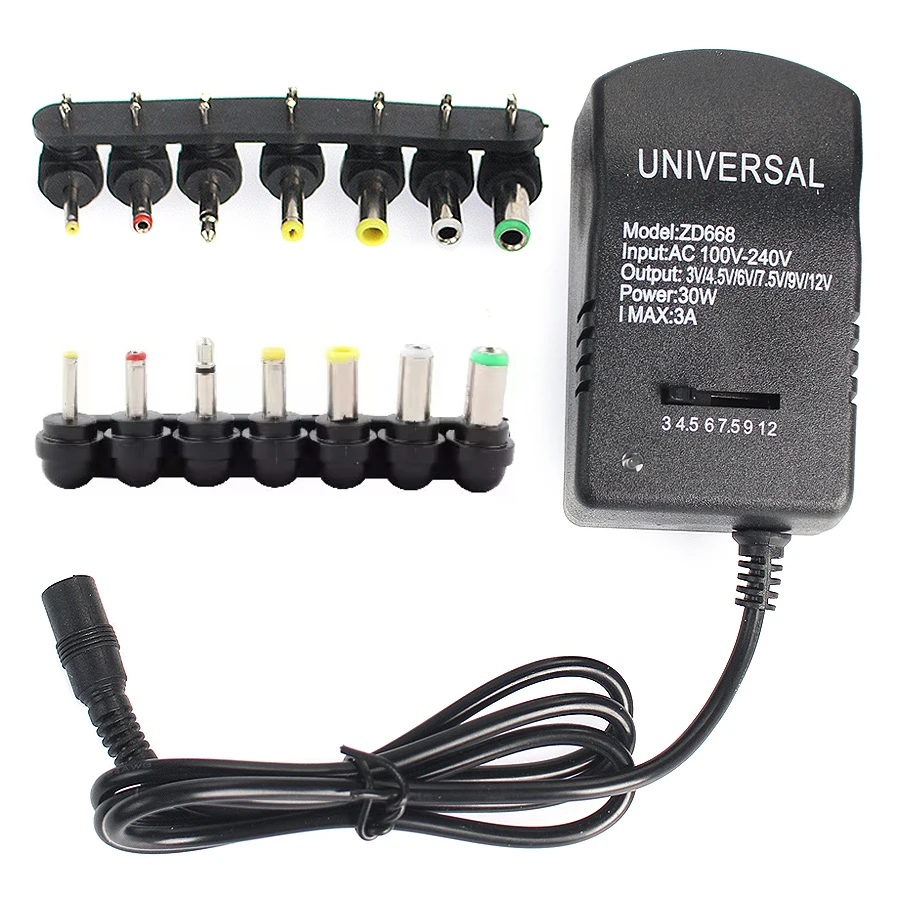
The Universal Multi-Voltage Power Adapter, model ZD668, presents itself as a versatile solution for powering a range of small electronic devices. This unit is designed to convert standard AC line voltage (100V-240V) into selectable DC outputs, specifically 3V, 4.5V, 6V, 7.5V, 9V, and 12V. Its maximum power output is rated at 30W, with a maximum current capacity of 3A. This allows for compatibility with a broad spectrum of low-power electronics.
Such a multi-voltage capability is crucial for users who manage various devices, each with distinct power requirements. Instead of accumulating multiple single-voltage adapters, a single unit can serve several purposes. This reduces clutter and simplifies power management. The selectable voltage mechanism, typically a rotary switch, ensures the user can precisely match the device's input specification. Incorrect voltage can damage electronics.
Compared to fixed-voltage power supplies, this adapter offers significant operational flexibility. Standard wall warts often provide only one voltage. This adapter eliminates the need for a dedicated power supply for every gadget. It is an upgrade from single-purpose power bricks.
Interchangeable Connector System
Central to this adapter's utility is its comprehensive set of seven interchangeable DC connector plugs. These plugs are designed to accommodate various barrel jack sizes and polarities commonly found on consumer electronics. The visual evidence indicates a range of common sizes, likely including popular diameters such as 5.5x2.1mm, 5.5x2.5mm, 3.5x1.35mm, and others. Each plug is clearly distinguishable.
This array of connectors ensures broad compatibility across different brands and types of devices. Users can power routers, cameras, speakers, fans, table lamps, and video cameras, as explicitly illustrated in the product imagery. The ability to swap tips is a practical advantage. This prevents the frustration of having a power adapter but lacking the correct physical connector. It is a highly adaptable system.
Generic adapters often come with only one or two common tips. This adapter's seven-plug system significantly broadens its application scope. It offers a more complete solution than many basic alternatives. This is a key differentiator.
Integrated Safety Protocols
The adapter explicitly advertises several critical safety features, including Overload Protection, Short Circuit Protection, and High Precision Voltage. These are fundamental safeguards in any electrical power supply. Overload protection prevents the adapter from drawing excessive current, which could lead to overheating or component failure. Short circuit protection immediately cuts power in the event of an accidental short, mitigating fire risks. High precision voltage ensures stable output. This protects connected devices from voltage fluctuations.
These protective measures are vital for both the longevity of the adapter and the safety of the connected equipment. Without them, a sudden power surge or an internal fault in a device could destroy the adapter or, worse, pose a fire hazard. The presence of these features indicates a basic level of electrical engineering consideration. Safety is paramount. Users should always verify the adapter's output matches their device's input requirements to prevent damage.
Many low-cost, unbranded adapters often omit these crucial safety features, posing significant risks. This adapter's explicit mention of these protections positions it as a more reliable option than truly generic, unverified power sources. It is a safer choice. However, the specific standards (e.g., UL, CE) to which these protections adhere are not specified, which is a common limitation for budget-friendly electronics.
Operational Versatility and Global Compatibility
The adapter's input voltage range of AC 100V-240V signifies its universal compatibility with electrical grids worldwide. This means it can be used in regions with 110V-120V systems (like North America) and 220V-240V systems (like Europe and many other parts of the world). The product images also show both US and EU plug types, indicating regional variants are available. This is a significant convenience for international travelers or those with diverse power needs.
Such broad input compatibility eliminates the need for separate voltage converters when traveling. Users can simply select the appropriate physical plug type (US or EU) for their region. This simplifies travel preparations. It also makes the adapter suitable for a global market. The design prioritizes user convenience.
Unlike region-specific power adapters that are limited to a single voltage standard, this universal input design offers superior flexibility. It is an essential feature for modern, interconnected lifestyles. This adapter transcends geographical power limitations. It is a truly global power solution.
Construction and Material Integrity
The adapter unit itself appears to be constructed from a durable, matte black plastic casing. The cable connecting the adapter to the DC output jack is also black and appears to be adequately insulated. The interchangeable tips are also plastic, with metal contact points. The overall aesthetic is functional and utilitarian. The visible materials imply a standard level of durability for indoor use.
Proper insulation and robust casing are critical for electrical safety. The plastic housing protects internal components from physical damage and prevents accidental contact with live circuits. The cable's insulation ensures current remains contained. This design minimizes the risk of electrical shock. The construction appears competent for its intended purpose. Users should inspect for any visible damage before use.
Compared to adapters with flimsy casings or thin, easily frayed cables, this unit appears to offer a more substantial build. While not industrial-grade, it seems suitable for typical consumer applications. It is a practical design. The quality of the internal wiring and solder joints, however, cannot be assessed from visual inspection alone.
Value Proposition and Application Scenarios
This multi-voltage adapter offers a compelling value proposition for users seeking a single power solution for multiple low-power devices. Its combination of selectable voltage outputs and a wide array of DC plugs addresses a common pain point: the proliferation of single-purpose power bricks. The advertised safety features add a layer of confidence. This product is designed for convenience.
Consider a scenario where a user has an old router, a small LED lamp, and a portable speaker, all requiring different voltages and plug sizes. Instead of purchasing three separate adapters, this single unit can power all of them sequentially. This saves money and reduces electronic waste. It is an economical choice. The long-term value comes from its adaptability.
Unlike purchasing individual, often more expensive, OEM power supplies for each device, this universal adapter provides a cost-effective alternative. It is an upgrade from a fragmented power solution. The initial investment is quickly recouped through its versatility. This adapter simplifies power management significantly.
The Electrical Engineer's Perspective on Performance
From an electrical engineering standpoint, the 30W maximum power output and 3A current capacity are suitable for a wide array of small electronic devices. It is crucial to understand that while the adapter offers multiple voltage settings, the maximum current output (3A) is generally consistent across these voltages, meaning the power output will vary. For instance, at 3V, the maximum power is 9W (3V * 3A), while at 12V, it reaches 36W (12V * 3A), though the product states 30W max. This discrepancy suggests the 3A is a general rating, and the actual maximum current might be slightly lower at higher voltages to stay within the 30W limit. Users must verify their device's current draw. Overloading can cause issues.
The