Universal Stainless Steel Sink Strainer
Official Store Deal
Expert Analysis Overview
The Universal Stainless Steel Sink Strainer is a foundational kitchen utility designed for culinary environments demanding robust waste management and efficient drainage. This component directly addresses the critical need for maintaining hygienic and functional sink operations, particularly in settings where food preparation generates considerable debris.
The visible construction confirms the use of 304 stainless steel for the primary strainer basket and its associated metallic components. This specific alloy is a hallmark of quality in kitchenware, renowned for its superior properties.
This material choice directly implies exceptional corrosion resistance against water, food acids, and common cleaning agents. It resists rust formation, a common issue with lesser metals, ensuring the strainer maintains its structural integrity and aesthetic appeal over prolonged periods of exposure to moisture and varied chemical compositions found in kitchen waste. Hygiene is paramount.
Compared to conventional chrome-plated steel or plastic alternatives, 304 stainless steel offers a significantly extended service life. Plastic strainers often degrade, becoming brittle or discolored, while lower-grade steels can pit and rust, creating unsanitary surfaces. This material choice represents a clear upgrade in durability and sanitation for any kitchen sink.
The inherent strength of 304 stainless steel also contributes to the strainer's mechanical resilience. It withstands the impact of dropped utensils or heavy cookware without deforming or cracking.
Such robustness means the strainer can endure the rigors of a busy kitchen, from vigorous scrubbing to accidental bumps. It holds its shape. This prevents the common issue of flimsy strainers bending out of true, which compromises their ability to sit flush in the drain opening and effectively trap debris.
This level of material engineering contrasts sharply with the often-disposable nature of cheaper strainers. The investment in 304 stainless steel translates into reduced replacement frequency, offering long-term value and consistent performance in demanding culinary settings.
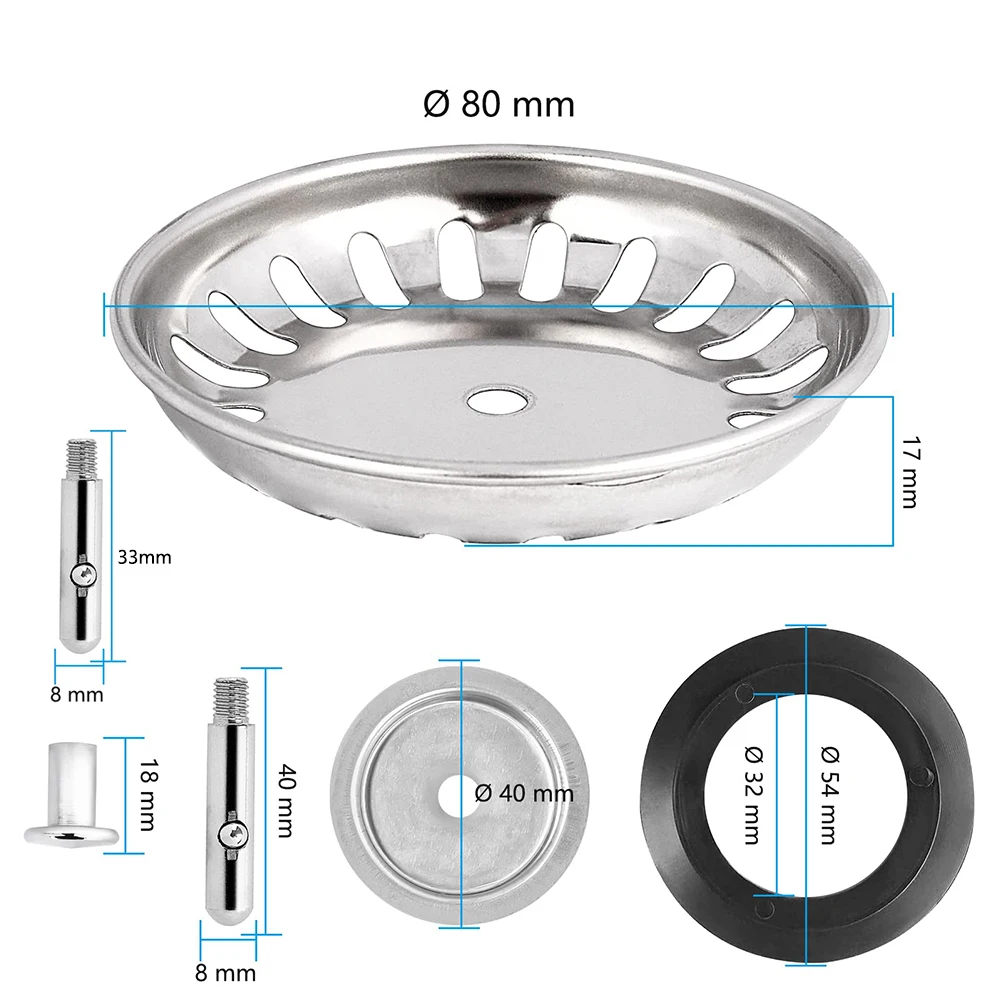
The strainer features a perforated basket design with evenly spaced slots along its perimeter and a central opening for the fixing pin. The basket's depth, measured at 17mm, provides ample volume for collecting food particles.
This design effectively traps a wide range of food debris, from vegetable scraps to pasta, preventing them from entering the drainpipe and causing blockages. Simultaneously, the numerous perforations ensure that water can drain rapidly and efficiently, a crucial aspect for high-volume dishwashing or quick rinsing tasks. Water flows freely.
Unlike mesh strainers that can quickly become clogged with fine particles and slow drainage to a trickle, or open drains that allow larger debris to pass, this perforated design strikes an optimal balance. It offers superior debris capture without significantly impeding water flow, supporting efficient kitchen operations.
An integrated rubber gasket is a critical component, positioned beneath the strainer basket. Its dimensions, with a 54mm outer diameter and 32mm inner diameter, indicate a substantial sealing surface.
This gasket creates a watertight seal between the strainer and the sink's drain opening. This prevents water from leaking past the strainer, ensuring all drainage occurs through the perforated basket. A secure seal is vital for preventing water damage under the sink and maintaining hygienic conditions.
Many generic strainers rely solely on a friction fit or lack a dedicated gasket, leading to inefficient debris capture and potential leaks. The inclusion of a purpose-designed rubber gasket elevates the functionality, providing a reliable barrier against both water bypass and the escape of smaller particles.
The product offers multiple outer diameter options: 80mm, 82mm, and 84mm. This range directly addresses the variability in standard sink drain sizes across different manufacturers and regions.
This variability in sizing ensures a precise fit for a broad spectrum of kitchen sinks. An accurately sized strainer sits flush with the sink basin, preventing food particles from slipping around the edges and into the drainpipe. A snug fit is essential.
Unlike universal-fit strainers that often compromise on sealing effectiveness due to their generalized dimensions, providing specific size options allows users to select a strainer that integrates perfectly with their existing drain assembly, optimizing its debris-trapping capabilities.
The inclusion of two fixing pin sizes (33mm and 40mm in length, both 8mm in diameter) further enhances compatibility. These pins are designed to secure the strainer to the underlying drain mechanism.
This dual-pin approach accommodates varying thicknesses of sink materials or drain assembly designs. The longer pin can be used for thicker sinks or deeper drain flanges, while the shorter pin suits thinner configurations, ensuring a stable and secure installation regardless of the specific sink setup. Stability is key.
Many replacement strainers come with a single, non-adjustable fixing pin, limiting their compatibility. The provision of two distinct lengths demonstrates a consideration for real-world installation challenges, offering greater flexibility and ensuring a firm attachment that resists dislodgement during use.
Installation of this sink strainer is designed to be straightforward, typically requiring no specialized tools. The fixing pin threads into the central hole of the strainer, securing it from below.
This ease of installation means the strainer can be quickly deployed or replaced, minimizing downtime in a busy kitchen. The intuitive design ensures that even individuals with minimal plumbing experience can achieve a secure and effective installation. Setup is simple.
Compared to complex drain assemblies that demand professional installation or specialized tools, this strainer's design prioritizes user accessibility. This simplifies maintenance and replacement, making it a practical choice for both home cooks and professional kitchens.
Regular cleaning of the strainer is facilitated by its smooth, polished stainless steel surface and removable design. Food particles do not easily adhere to the non-porous material.
This ease of cleaning is crucial for maintaining kitchen hygiene and preventing unpleasant odors. The strainer can be quickly lifted, emptied, and rinsed under running water, or scrubbed with a brush for more thorough cleaning. Cleanliness is effortless.
Unlike plastic strainers that can stain or harbor bacteria in microscopic scratches, the stainless steel surface remains hygienic with minimal effort. This contributes to a cleaner kitchen environment and prolongs the life of the strainer, ensuring it continues to perform its debris-capturing function effectively.
This stainless steel sink strainer represents a practical upgrade for any kitchen, offering a durable, efficient, and hygienic solution for managing sink waste. Its robust construction and thoughtful design ensure long-term reliability and ease of use, freeing up culinary professionals and home chefs to focus on their craft rather than persistent drain issues. Imagine a kitchen where drain clogs are a distant memory, and cleanup is consistently swift and straightforward, allowing for uninterrupted creative flow and a consistently pristine workspace.
The Resilient Core: Material Science in the Kitchen
The visible construction confirms the use of 304 stainless steel for the primary strainer basket and its associated metallic components. This specific alloy is a hallmark of quality in kitchenware, renowned for its superior properties.
This material choice directly implies exceptional corrosion resistance against water, food acids, and common cleaning agents. It resists rust formation, a common issue with lesser metals, ensuring the strainer maintains its structural integrity and aesthetic appeal over prolonged periods of exposure to moisture and varied chemical compositions found in kitchen waste. Hygiene is paramount.
Compared to conventional chrome-plated steel or plastic alternatives, 304 stainless steel offers a significantly extended service life. Plastic strainers often degrade, becoming brittle or discolored, while lower-grade steels can pit and rust, creating unsanitary surfaces. This material choice represents a clear upgrade in durability and sanitation for any kitchen sink.
Engineering for Longevity
The inherent strength of 304 stainless steel also contributes to the strainer's mechanical resilience. It withstands the impact of dropped utensils or heavy cookware without deforming or cracking.
Such robustness means the strainer can endure the rigors of a busy kitchen, from vigorous scrubbing to accidental bumps. It holds its shape. This prevents the common issue of flimsy strainers bending out of true, which compromises their ability to sit flush in the drain opening and effectively trap debris.
This level of material engineering contrasts sharply with the often-disposable nature of cheaper strainers. The investment in 304 stainless steel translates into reduced replacement frequency, offering long-term value and consistent performance in demanding culinary settings.
Precision in Design: Capturing Debris, Maintaining Flow
The strainer features a perforated basket design with evenly spaced slots along its perimeter and a central opening for the fixing pin. The basket's depth, measured at 17mm, provides ample volume for collecting food particles.
This design effectively traps a wide range of food debris, from vegetable scraps to pasta, preventing them from entering the drainpipe and causing blockages. Simultaneously, the numerous perforations ensure that water can drain rapidly and efficiently, a crucial aspect for high-volume dishwashing or quick rinsing tasks. Water flows freely.
Unlike mesh strainers that can quickly become clogged with fine particles and slow drainage to a trickle, or open drains that allow larger debris to pass, this perforated design strikes an optimal balance. It offers superior debris capture without significantly impeding water flow, supporting efficient kitchen operations.
The Role of the Gasket
An integrated rubber gasket is a critical component, positioned beneath the strainer basket. Its dimensions, with a 54mm outer diameter and 32mm inner diameter, indicate a substantial sealing surface.
This gasket creates a watertight seal between the strainer and the sink's drain opening. This prevents water from leaking past the strainer, ensuring all drainage occurs through the perforated basket. A secure seal is vital for preventing water damage under the sink and maintaining hygienic conditions.
Many generic strainers rely solely on a friction fit or lack a dedicated gasket, leading to inefficient debris capture and potential leaks. The inclusion of a purpose-designed rubber gasket elevates the functionality, providing a reliable barrier against both water bypass and the escape of smaller particles.
Tailored Fitment: Addressing Diverse Sink Requirements
The product offers multiple outer diameter options: 80mm, 82mm, and 84mm. This range directly addresses the variability in standard sink drain sizes across different manufacturers and regions.
This variability in sizing ensures a precise fit for a broad spectrum of kitchen sinks. An accurately sized strainer sits flush with the sink basin, preventing food particles from slipping around the edges and into the drainpipe. A snug fit is essential.
Unlike universal-fit strainers that often compromise on sealing effectiveness due to their generalized dimensions, providing specific size options allows users to select a strainer that integrates perfectly with their existing drain assembly, optimizing its debris-trapping capabilities.
The Versatility of the Fixing Pin
The inclusion of two fixing pin sizes (33mm and 40mm in length, both 8mm in diameter) further enhances compatibility. These pins are designed to secure the strainer to the underlying drain mechanism.
This dual-pin approach accommodates varying thicknesses of sink materials or drain assembly designs. The longer pin can be used for thicker sinks or deeper drain flanges, while the shorter pin suits thinner configurations, ensuring a stable and secure installation regardless of the specific sink setup. Stability is key.
Many replacement strainers come with a single, non-adjustable fixing pin, limiting their compatibility. The provision of two distinct lengths demonstrates a consideration for real-world installation challenges, offering greater flexibility and ensuring a firm attachment that resists dislodgement during use.
Operational Efficiency and Upkeep
Installation of this sink strainer is designed to be straightforward, typically requiring no specialized tools. The fixing pin threads into the central hole of the strainer, securing it from below.
This ease of installation means the strainer can be quickly deployed or replaced, minimizing downtime in a busy kitchen. The intuitive design ensures that even individuals with minimal plumbing experience can achieve a secure and effective installation. Setup is simple.
Compared to complex drain assemblies that demand professional installation or specialized tools, this strainer's design prioritizes user accessibility. This simplifies maintenance and replacement, making it a practical choice for both home cooks and professional kitchens.
Maintaining Peak Performance
Regular cleaning of the strainer is facilitated by its smooth, polished stainless steel surface and removable design. Food particles do not easily adhere to the non-porous material.
This ease of cleaning is crucial for maintaining kitchen hygiene and preventing unpleasant odors. The strainer can be quickly lifted, emptied, and rinsed under running water, or scrubbed with a brush for more thorough cleaning. Cleanliness is effortless.
Unlike plastic strainers that can stain or harbor bacteria in microscopic scratches, the stainless steel surface remains hygienic with minimal effort. This contributes to a cleaner kitchen environment and prolongs the life of the strainer, ensuring it continues to perform its debris-capturing function effectively.
This stainless steel sink strainer represents a practical upgrade for any kitchen, offering a durable, efficient, and hygienic solution for managing sink waste. Its robust construction and thoughtful design ensure long-term reliability and ease of use, freeing up culinary professionals and home chefs to focus on their craft rather than persistent drain issues. Imagine a kitchen where drain clogs are a distant memory, and cleanup is consistently swift and straightforward, allowing for uninterrupted creative flow and a consistently pristine workspace.