USB-C Screw-Mount Sockets (2-Pin & 4-Pin)
Official Store Deal
Expert Analysis Overview
Precision Engineering for Enduring Connections
The USB 3.1 Type C sockets, offered in both 2-pin and 4-pin configurations with integrated screw mounting plates, represent a critical component for robust electronics repair and custom fabrication. These connectors are designed to address the common failure points of standard surface-mount USB-C ports, providing a mechanically secure and electrically reliable interface. The inclusion of a mounting plate with through-holes for screws significantly enhances the structural integrity of the connection, a feature often overlooked in consumer-grade devices. This design choice directly counteracts the stresses that typically lead to port detachment or damage over time.
The Foundation of Reliable Power and Data
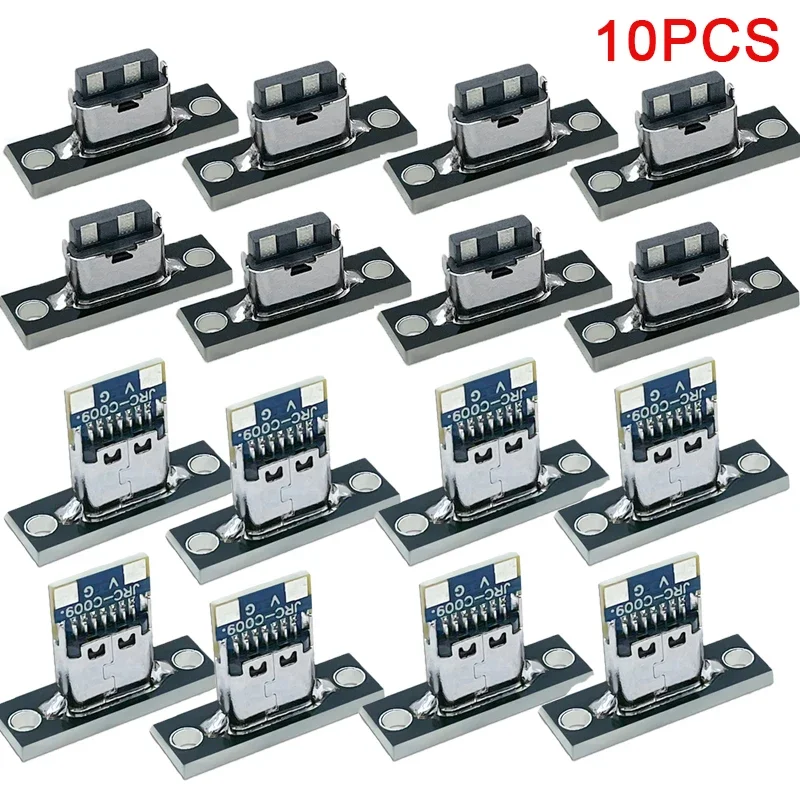
Each package contains 10 pieces, ensuring ample supply for multiple repair projects or prototyping endeavors. The connectors themselves are USB 3.1 Type C female, indicating compatibility with modern USB-C cables, though the pin configurations dictate the actual functionality. The 2-pin variant is specifically for power delivery, handling VBUS and GND lines, making it ideal for charging-only applications where data transfer is not required. The 4-pin version expands on this, incorporating additional data lines, typically D+ and D-, which support USB 2.0 data speeds alongside power.
Imagine a scenario where a device's charging port has failed due to repeated cable insertions and removals. A standard surface-mount component might have ripped its pads from the PCB, necessitating complex board repair or even replacement. These screw-mount sockets offer a direct, durable solution. The physical attachment to the enclosure or a dedicated mounting point offloads mechanical stress from the solder joints, ensuring a much longer operational lifespan. This is a significant upgrade.
Compared to typical integrated USB-C ports found on many consumer electronics, which often rely solely on surface-mount technology (SMT) for attachment, these components provide superior mechanical anchoring. SMT components are susceptible to shear forces, especially with the tight fit of USB-C cables. The screw mounting fundamentally changes this dynamic, distributing force across a larger area and into the device's chassis, rather than concentrating it on delicate solder pads. This design choice is a clear advantage for longevity.
Mechanical Integrity Beyond Surface Mount
Visual inspection reveals a sturdy construction, with a metallic outer shell providing shielding and structural support for the internal contacts. The mounting plate itself measures 20.1mm in length, providing a substantial base for attachment. The 2-pin connector stands at 8.8mm in height, while the 4-pin version is slightly taller at 14.6mm, likely due to the additional internal pin structure and PCB real estate required for the data lines. These dimensions are critical for fitment in various enclosures.
Screw mounting prevents common failure modes. Many portable devices suffer from broken charging ports. The physical screws anchor the connector securely. This prevents the rocking motion that eventually fatigues solder joints and breaks electrical connections. Such a design is particularly beneficial for devices subjected to frequent plugging and unplugging, or those used in environments where physical knocks are common.
Unlike ports directly soldered to a main PCB without additional mechanical support, these connectors feature a separate, robust mounting plate. This plate acts as an intermediary, absorbing and distributing mechanical stresses. The result is a more resilient connection that protects the underlying circuit board from damage. It is a smart engineering decision.
Pin Configuration and Signal Pathways
Understanding the pin configuration is paramount for proper application. The distinction between 2-pin and 4-pin versions is not merely about size but about functional capability. Repair technicians must select the correct variant based on the original device's requirements.
Differentiating 2-Pin and 4-Pin Functionality
The 2-pin connector is a straightforward power interface. It provides the VBUS (voltage bus) and GND (ground) connections necessary for charging. This simplicity makes it ideal for custom power solutions or replacing charging-only ports in devices like basic IoT sensors, portable lights, or simple battery packs. Its function is singular and reliable.
Conversely, the 4-pin connector expands functionality to include basic data transfer. The additional D+ and D
When replacing a damaged port, matching the pin count and ensuring the new connector provides the necessary data lines is essential. Using a 2-pin connector where a 4-pin was originally present will result in a device that charges but cannot transfer data. This careful selection prevents functional degradation of the repaired device. Always verify the original port's pinout.
Soldering Considerations for Optimal Performance
The connectors feature through-hole pins for soldering, which generally offers a stronger mechanical and electrical connection compared to purely surface-mount pads. The pins are clearly visible on the PCB portion of the connector, indicating straightforward soldering points for experienced technicians. Proper soldering technique is crucial for both electrical continuity and the long-term durability of the repair.
Clean solder joints are non-negotiable for both current flow and data integrity. Cold solder joints or bridges can lead to intermittent charging, slow data transfer, or complete failure. Technicians should use appropriate flux, solder, and temperature-controlled soldering irons to ensure robust connections. The visible pads allow for easy inspection.
The larger pads and through-hole design of these connectors offer an advantage during soldering, providing more surface area for heat transfer and a stronger physical bond. This contrasts with tiny, delicate surface-mount pads that are prone to lifting or damage under excessive heat or mechanical stress. The design facilitates a more forgiving and reliable soldering process, even for those with moderate experience.
Longevity and Repair Economics
Investing in quality repair components like these USB-C sockets translates directly into significant long-term savings and reduced electronic waste. The economic benefits extend beyond the immediate repair cost.
Extending Device Lifespans
The cost-effectiveness of component-level repair cannot be overstated. Instead of discarding an entire device due to a single faulty port, these affordable replacement parts enable a targeted repair. This approach saves consumers money and reduces the environmental impact of electronic waste. It is a sustainable choice.
By facilitating the repair of otherwise functional devices, these connectors directly contribute to reducing e-waste. Extending the lifespan of electronics by even a few years has a substantial positive impact on resource consumption and landfill burden. This is a responsible product.
Compared to the exorbitant cost of replacing an entire motherboard or purchasing a new device, the minimal investment in these connectors makes component-level repair a highly attractive option. For repair shops, it allows them to offer more affordable services, attracting a wider customer base. The value proposition is clear.
The Professional's Choice for Custom Builds
Beyond repairs, these connectors are invaluable for custom electronics projects, prototyping, and DIY builds. Their robust mounting and standardized USB-C interface make them a versatile choice for integrating reliable power and data connectivity into new designs. Engineers and hobbyists will appreciate the flexibility.
The flexibility offered by the separate mounting plate means these connectors can be integrated into various enclosure designs, whether 3D printed, machined, or off-the-shelf. This adaptability is crucial for custom projects where standard PCB-mounted ports might not fit or offer sufficient mechanical strength. It simplifies design challenges.
Unlike integrated ports on development Boards, which are fixed in position, these standalone connectors allow for optimal placement within a custom enclosure. This freedom of design ensures that the USB-C port is precisely where it needs to be for user convenience and device aesthetics. This is a significant design advantage.
Imagine the satisfaction of successfully repairing a beloved tablet or building a custom power bank that reliably charges and transfers data, all thanks to a robust, screw-mounted USB-C port. These connectors provide the foundation for such reliable outcomes, ensuring your devices remain functional and your projects perform as intended. They offer peace of mind and extended utility, making them an indispensable addition to any electronics workbench.