Vertical Garment Compression System
Official Store Deal
Expert Analysis Overview
The Vertical Garment Compression System is an ingenious closet optimization solution designed for urban dwellers and anyone struggling with limited wardrobe space. This innovative organizer redefines garment storage by converting horizontal hanging space into a highly efficient vertical stack, effectively doubling capacity for specific clothing types.
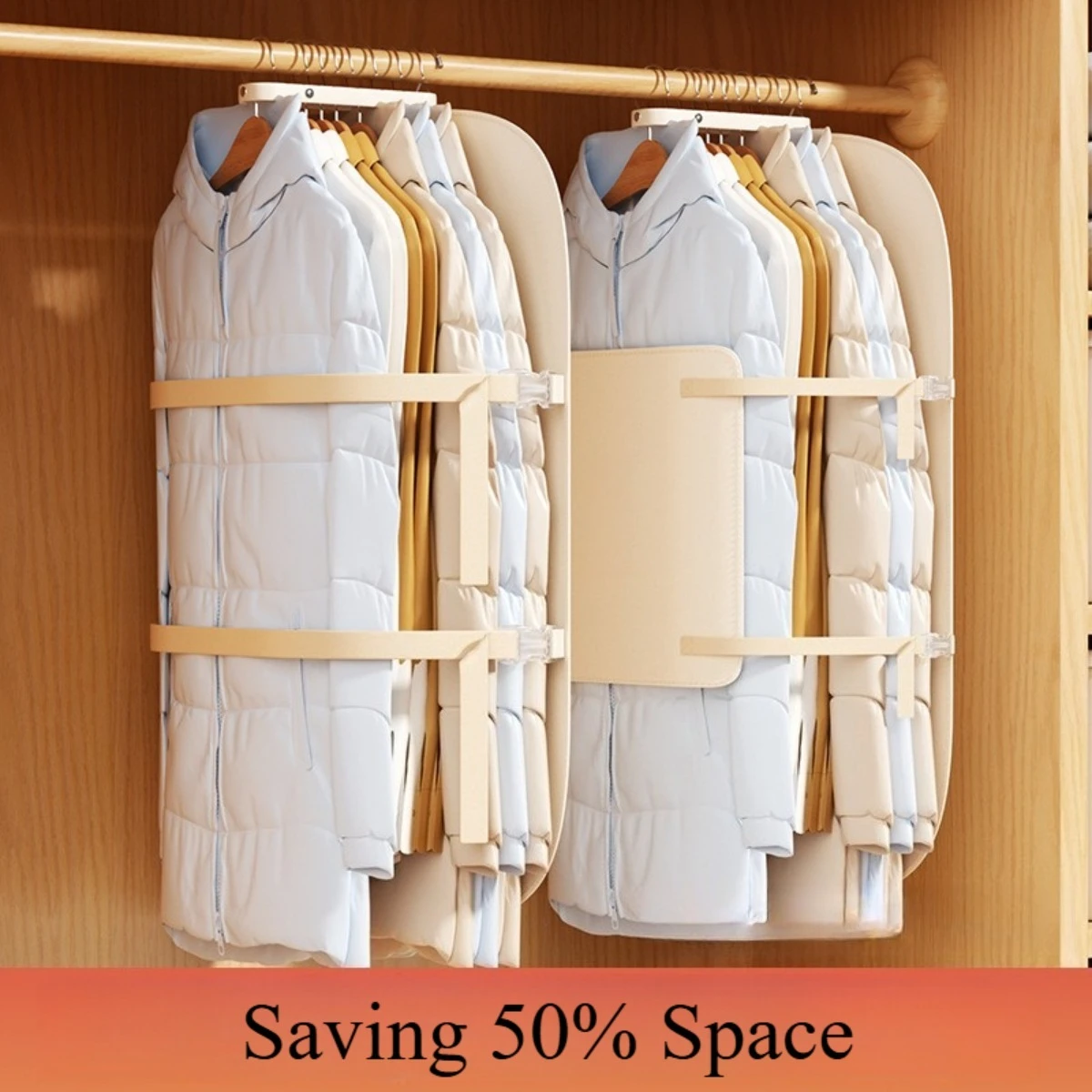
This system fundamentally reconfigures closet space. It utilizes a series of panels and straps to compress multiple garments into a single, vertically oriented unit. The design is straightforward.
The visual evidence indicates a construction primarily from non-woven fabric and PP (polypropylene) panels. The non-woven fabric offers breathability, crucial for long-term garment storage, preventing mustiness and allowing air circulation around clothes. This material choice implies a lightweight yet durable construction, capable of supporting the weight of several jackets without tearing.
Compared to traditional plastic garment bags, which often lack structural integrity and can trap moisture, the non-woven fabric provides a more forgiving and breathable environment. The inclusion of rigid PP panels is a significant upgrade, providing the necessary structure to maintain the compressed shape and prevent garments from slumping or creasing excessively. Standard garment bags typically offer no such internal support.
Each unit measures approximately 89cm (35.04 inches) in height and 58cm (22.83 inches) in width. These dimensions are critical.
This specific sizing allows the system to fit within most standard closet rod lengths while maximizing vertical drop. The ability to hang multiple items, such as down jackets or coats, within this compact footprint directly addresses the common problem of overflowing wardrobes. It is a direct answer to clutter.
Conventional hangers consume significant horizontal rod space, often leaving unused vertical volume. This system flips that paradigm, making efficient use of the often-neglected vertical dimension. It is a clear departure from single-garment hanging.
The compression is achieved through a series of adjustable straps and buckles. Users push garments together, buckle them up, and then draw the straps tight. This process is intuitive.
This mechanism allows for variable compression, accommodating different garment thicknesses and quantities. The straps secure the clothes firmly against the internal panels, reducing bulk and maintaining a tidy profile. Garments remain protected from dust.
Unlike vacuum bags that can aggressively compress fabrics and potentially damage delicate materials or leave deep creases, this system offers a gentler, more structured compression. The internal panels act as a buffer, preventing direct pressure points on individual garments. It is a less intrusive method.
The visible materials, specifically the non-woven fabric and PP panels, suggest a focus on practical durability. Non-woven fabric is known for its resistance to tearing and its lightweight nature. The PP panels provide rigidity.
This combination ensures the organizer can withstand the repeated stress of loading, compressing, and hanging heavy winter wear. The material choice also implies ease of cleaning, likely requiring only a wipe-down. It is built for sustained use.
Many budget storage solutions rely on flimsy plastics or thin fabrics that quickly degrade under the weight of heavy clothing. This system's material selection positions it as a more robust alternative, designed for a longer service life. It avoids premature wear.
Installation appears straightforward, requiring only a standard closet rod. The system hangs directly onto the rod. No complex assembly is needed.
Users simply load their garments, typically by hanging them on individual hangers first, then placing these hangers onto the internal hooks or loops of the compression system. The buckling and drawing process is quick. This design prioritizes user convenience.
Compared to cumbersome shelving units or drawer systems that require significant setup and permanent fixture, this hanging solution offers flexibility. It can be easily moved or reconfigured as wardrobe needs change. It is highly adaptable.
The system is presented in neutral tones, typically grey or beige, allowing it to blend seamlessly into most closet interiors. Its unobtrusive design maintains a clean aesthetic. It is visually discreet.
While primarily showcased with bulky items like jackets and coats, its design suggests versatility for other items that benefit from vertical compression, such as sweaters or thick shirts. This broadens its utility. It is not a single-purpose item.
Unlike brightly colored or overly patterned storage solutions that can clash with interior decor, the muted palette of this system ensures it complements rather than distracts from the overall organization. It prioritizes function over overt style.
At its price point, this system offers significant value by effectively doubling usable closet space without the need for expensive renovations or additional furniture. It is an economical solution.
Considering the cost of alternative storage solutions, such as new dressers or custom closet installations, this compression system provides a highly cost-effective way to manage wardrobe overflow. Its durability further enhances its long-term value. It saves money over time.
This product is an investment in spatial efficiency, transforming a cluttered closet into an organized, accessible wardrobe. Imagine opening your closet to find every garment neatly arranged, easily visible, and occupying half the space it once did, freeing up room for new acquisitions or simply a more serene environment. This system delivers that tangible benefit, making daily routines smoother and your living space more harmonious.
Spatial Reconfiguration and Design
This system fundamentally reconfigures closet space. It utilizes a series of panels and straps to compress multiple garments into a single, vertically oriented unit. The design is straightforward.
The visual evidence indicates a construction primarily from non-woven fabric and PP (polypropylene) panels. The non-woven fabric offers breathability, crucial for long-term garment storage, preventing mustiness and allowing air circulation around clothes. This material choice implies a lightweight yet durable construction, capable of supporting the weight of several jackets without tearing.
Compared to traditional plastic garment bags, which often lack structural integrity and can trap moisture, the non-woven fabric provides a more forgiving and breathable environment. The inclusion of rigid PP panels is a significant upgrade, providing the necessary structure to maintain the compressed shape and prevent garments from slumping or creasing excessively. Standard garment bags typically offer no such internal support.
Capacity and Dimensional Efficiency
Each unit measures approximately 89cm (35.04 inches) in height and 58cm (22.83 inches) in width. These dimensions are critical.
This specific sizing allows the system to fit within most standard closet rod lengths while maximizing vertical drop. The ability to hang multiple items, such as down jackets or coats, within this compact footprint directly addresses the common problem of overflowing wardrobes. It is a direct answer to clutter.
Conventional hangers consume significant horizontal rod space, often leaving unused vertical volume. This system flips that paradigm, making efficient use of the often-neglected vertical dimension. It is a clear departure from single-garment hanging.
Compression Mechanism and Garment Protection
The compression is achieved through a series of adjustable straps and buckles. Users push garments together, buckle them up, and then draw the straps tight. This process is intuitive.
This mechanism allows for variable compression, accommodating different garment thicknesses and quantities. The straps secure the clothes firmly against the internal panels, reducing bulk and maintaining a tidy profile. Garments remain protected from dust.
Unlike vacuum bags that can aggressively compress fabrics and potentially damage delicate materials or leave deep creases, this system offers a gentler, more structured compression. The internal panels act as a buffer, preventing direct pressure points on individual garments. It is a less intrusive method.
Material Integrity and Longevity
The visible materials, specifically the non-woven fabric and PP panels, suggest a focus on practical durability. Non-woven fabric is known for its resistance to tearing and its lightweight nature. The PP panels provide rigidity.
This combination ensures the organizer can withstand the repeated stress of loading, compressing, and hanging heavy winter wear. The material choice also implies ease of cleaning, likely requiring only a wipe-down. It is built for sustained use.
Many budget storage solutions rely on flimsy plastics or thin fabrics that quickly degrade under the weight of heavy clothing. This system's material selection positions it as a more robust alternative, designed for a longer service life. It avoids premature wear.
Installation and User Experience
Installation appears straightforward, requiring only a standard closet rod. The system hangs directly onto the rod. No complex assembly is needed.
Users simply load their garments, typically by hanging them on individual hangers first, then placing these hangers onto the internal hooks or loops of the compression system. The buckling and drawing process is quick. This design prioritizes user convenience.
Compared to cumbersome shelving units or drawer systems that require significant setup and permanent fixture, this hanging solution offers flexibility. It can be easily moved or reconfigured as wardrobe needs change. It is highly adaptable.
Aesthetic Integration and Versatility
The system is presented in neutral tones, typically grey or beige, allowing it to blend seamlessly into most closet interiors. Its unobtrusive design maintains a clean aesthetic. It is visually discreet.
While primarily showcased with bulky items like jackets and coats, its design suggests versatility for other items that benefit from vertical compression, such as sweaters or thick shirts. This broadens its utility. It is not a single-purpose item.
Unlike brightly colored or overly patterned storage solutions that can clash with interior decor, the muted palette of this system ensures it complements rather than distracts from the overall organization. It prioritizes function over overt style.
Value Proposition and Cost Efficiency
At its price point, this system offers significant value by effectively doubling usable closet space without the need for expensive renovations or additional furniture. It is an economical solution.
Considering the cost of alternative storage solutions, such as new dressers or custom closet installations, this compression system provides a highly cost-effective way to manage wardrobe overflow. Its durability further enhances its long-term value. It saves money over time.
This product is an investment in spatial efficiency, transforming a cluttered closet into an organized, accessible wardrobe. Imagine opening your closet to find every garment neatly arranged, easily visible, and occupying half the space it once did, freeing up room for new acquisitions or simply a more serene environment. This system delivers that tangible benefit, making daily routines smoother and your living space more harmonious.