Waterproof Heat Shrink Butt Connectors Kit
Official Store Deal
Expert Analysis Overview
Precision Electrical Interconnection: An Expert Review
The Waterproof Heat Shrink Butt Connectors Kit is a specialized solution for creating robust, sealed electrical connections, targeting professionals and serious DIY enthusiasts who prioritize long-term reliability in challenging environments. This kit moves beyond basic crimping, integrating heat-shrink technology with adhesive lining to establish connections that resist moisture, corrosion, and mechanical stress. The design emphasizes a secure, insulated splice, crucial for applications ranging from automotive wiring to marine electronics.
Core Material Science and Construction
The visible components illustrate a sophisticated multi-layer construction. Each connector features an outer layer of polyolefin tubing, a thermoplastic polymer known for its excellent electrical insulation properties and chemical resistance. This material is designed to shrink significantly when heated, creating a tight seal around the spliced wires. The image detailing the internal structure clearly labels a 3:1 shrink ratio, indicating a substantial reduction in diameter upon heat application. This high shrink ratio is critical for accommodating varying wire gauges within a specific connector size and ensuring a snug fit that prevents environmental ingress.
Beneath the polyolefin, a heat-activated adhesive lining is present. This internal adhesive melts during the heat-shrinking process, flowing into any voids and bonding to the wire insulation. The adhesive creates a watertight barrier, preventing moisture from reaching the electrical conductors. This is a significant upgrade over standard heat shrink tubing, which often relies solely on the tubing's compression for sealing. The adhesive layer ensures a truly sealed connection.
The conductive element, the connector barrel, is crafted from a single piece of copper. Copper is the industry standard for electrical conductors due to its high conductivity and corrosion resistance. The seamless construction of the barrel minimizes potential points of failure and ensures consistent electrical flow. This single-piece design is superior to seamed barrels, which can sometimes split under crimping pressure or introduce resistance.
Connection Integrity and Environmental Resistance
The primary function of these butt connectors is to create a durable, waterproof splice. The combination of polyolefin tubing and heat-activated adhesive achieves an IP67 waterproof rating, as indicated in the specifications. This rating signifies complete protection against dust ingress and resistance to immersion in water up to 1 meter for 30 minutes. Such a high level of environmental sealing is indispensable for outdoor, marine, or automotive applications where exposure to elements is constant. Water intrusion is a leading cause of electrical failures.
Traditional crimp connectors, even when insulated, often lack this level of moisture protection. They rely on the mechanical deformation of the metal barrel to secure the wires, which can leave microscopic gaps for moisture to penetrate. The heat-shrink adhesive system actively fills these gaps, encapsulating the connection. This proactive sealing mechanism significantly extends the lifespan of the electrical connection and prevents intermittent faults caused by corrosion.
Consider a marine environment. Saltwater is highly corrosive to copper. Without a robust seal, standard connections would quickly degrade, leading to increased resistance, power loss, and eventual circuit failure. These connectors provide a critical defense. They maintain signal integrity even when submerged.
Installation Dynamics and User Experience
Installation involves stripping the wire, inserting it into the connector, crimping the barrel, and then applying heat. The visual guide emphasizes even shrinking and a completely sealed result. Achieving this requires a consistent heat source, typically a heat gun, to ensure the polyolefin shrinks uniformly and the adhesive melts and flows effectively. Uneven heating can lead to incomplete sealing or localized stress points on the tubing. A proper heat gun provides controlled, even heat.
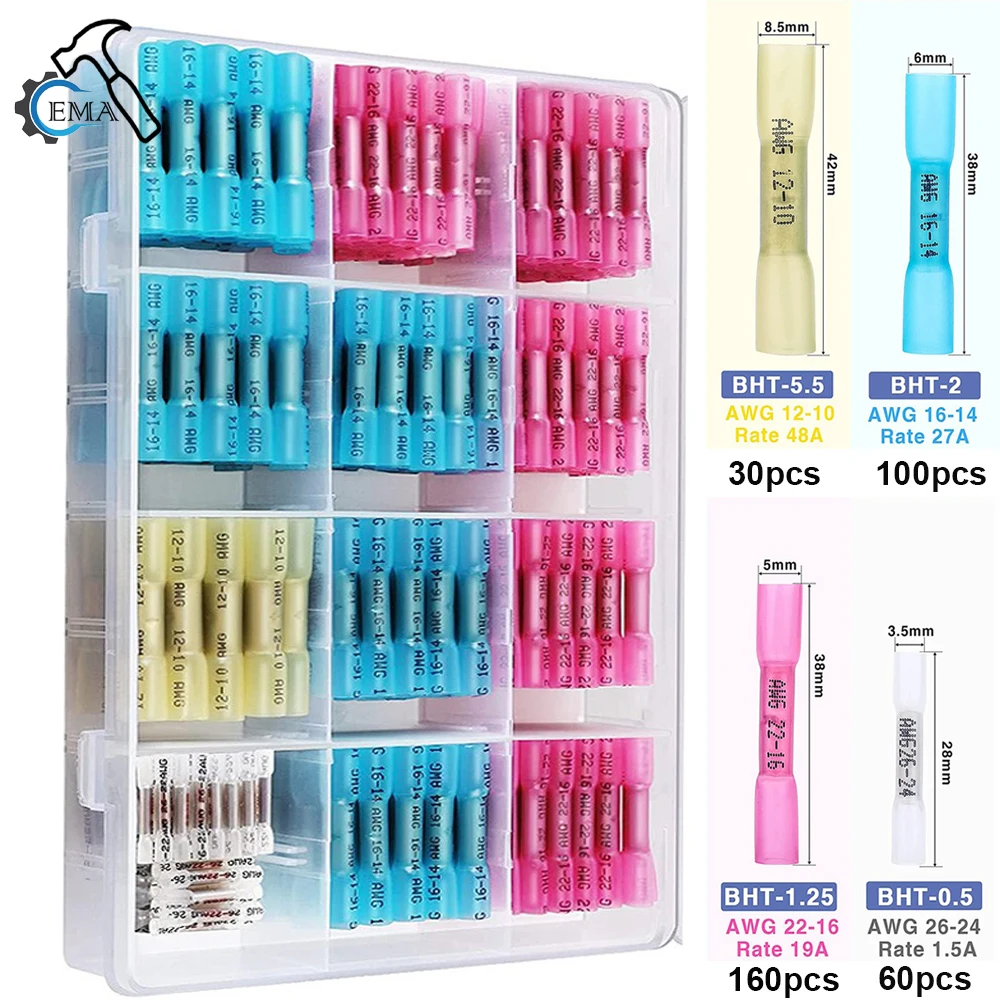
The transparent nature of the polyolefin tubing, particularly in the blue and yellow variants, allows for visual inspection of the crimped connection and the melted adhesive. This transparency is a valuable feature for quality control during installation. Users can visually confirm that the wire is properly seated and that the adhesive has flowed to create a complete seal, reducing guesswork and potential rework. This visual confirmation is a distinct advantage over opaque connectors.
Compared to soldering, these connectors offer a faster and often more accessible installation method, especially in situations where open flames or precise soldering irons are impractical or unsafe. While soldering can create a highly conductive and mechanically strong joint, it requires skill and specific tools. These heat shrink connectors provide a reliable alternative that can be installed with basic crimping tools and a heat gun, making them suitable for a broader range of users. They simplify complex wiring tasks.
Versatility and Application Spectrum
The kit includes connectors in various sizes, color-coded for different wire gauges: White (AWG 26-24), Red (AWG 22-18), Blue (AWG 16-14), Yellow (AWG 12-10), and Black (AWG 14-12). This comprehensive range ensures compatibility with a wide array of electrical wiring projects. The color-coding is a standard industry practice, facilitating quick identification and selection of the correct connector for the wire size. Using the correct gauge is paramount.
Each connector also features a wire gauge imprint on its surface. This imprint provides an additional layer of identification, ensuring the correct connector is chosen even if the color-coding is faded or obscured. This attention to detail minimizes errors during installation, which can be costly in terms of time and potential electrical issues. Proper gauge matching prevents overheating.
The product is widely used in marine projects, automotive applications, trucks, boats, stereo audio AV, underground cables, and 12-volt accessories. These diverse applications underscore the connectors' ability to perform reliably under demanding conditions. The robust sealing and secure electrical connection are critical for maintaining system integrity in these environments. From a simple car stereo to complex boat wiring, these connectors provide a consistent, reliable splice.
Long-Term Durability and Performance
Operating temperature range is specified as -55°C to 125°C. This broad range indicates the materials' stability across extreme thermal conditions, which is common in engine compartments or outdoor installations. The connectors are designed to maintain their integrity and sealing properties without becoming brittle in cold or softening excessively in heat. This wide temperature tolerance ensures consistent performance.
Furthermore, the connectors exhibit excellent stretch resistance. This mechanical property is important in applications where wires may experience vibration or movement, such as in vehicles. The ability of the connector to resist stretching ensures the integrity of the seal and the electrical connection is maintained over time, preventing loosening or exposure of the conductors. A connection that stretches can fail.
The overall design focuses on preventing common failure modes in electrical connections: corrosion, moisture ingress, and mechanical stress. By addressing these factors through its material science and construction, the kit offers a solution that not only makes a connection but protects it. This proactive protection translates into reduced maintenance and increased operational reliability for the connected systems. Imagine completing a wiring project with the confidence that your connections will withstand years of environmental exposure, ensuring consistent power delivery and signal integrity without the constant worry of intermittent faults or premature corrosion. This kit provides that peace of mind, allowing critical systems to function flawlessly in the most demanding conditions, from the harsh marine environment to the vibrating chassis of an off-road vehicle.