Waterproof Solder Seal Heat Shrink Wire Connectors
Official Store Deal
Expert Analysis Overview
The Definitive Electrical Junction: Solder Seal Heat Shrink Wire Connectors
Waterproof Solder Seal Heat Shrink Wire Connectors represent a critical upgrade in electrical termination technology, specifically engineered for professionals and enthusiasts demanding superior connection integrity and environmental resilience. This comprehensive assortment of terminals addresses the inherent vulnerabilities of traditional wire joining methods, offering a streamlined, robust, and highly reliable solution for a multitude of electrical applications. Its design prioritizes safety, durability, and ease of installation, making it an indispensable component in any electrical toolkit.
Engineered for Reliability: Beyond Basic Connections
These connectors are constructed from a dual-wall polyolefin tubing, which encases a precisely engineered solder ring and hot-melt adhesive. The outer tubing provides insulation and abrasion resistance, while the inner adhesive creates a watertight seal upon heating. The solder ring, positioned centrally, ensures a strong, conductive bond between the wires. This multi-layered composition is a significant departure from simple crimp connectors.
When subjected to controlled heat, the polyolefin tubing shrinks, the solder melts and flows, and the adhesive activates. This simultaneous action encapsulates the wire splice, forming a connection that is mechanically sound and electrically continuous. The resulting bond is resistant to vibration and pull-out, critical factors in automotive or marine environments. A secure connection is paramount.
Compared to conventional crimping, which relies solely on mechanical deformation, or traditional soldering, which often requires additional heat shrink tubing and can be prone to cold joints, these solder seal connectors integrate multiple protective layers into a single, efficient component. This simplifies the installation process considerably, reducing potential points of failure and enhancing overall system reliability. It's a smarter way to connect.
Precision in Conduction: Gauge Accuracy and Current Flow
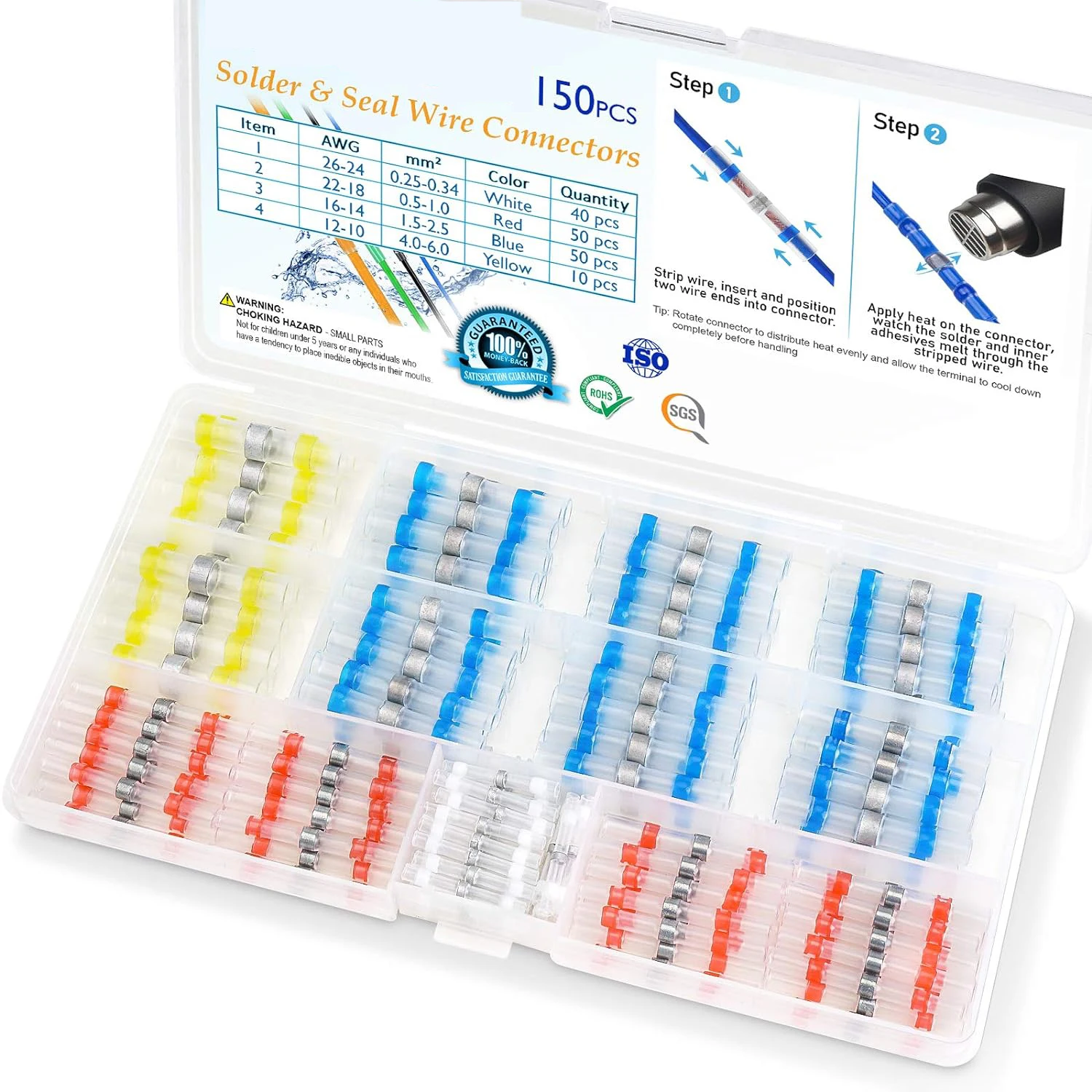
The kit provides a carefully selected range of connectors, color-coded for specific wire gauges: white for 26-24 AWG (0.25-0.34mm²), red for 22-18 AWG (0.5-1.0mm²), blue for 16-14 AWG (1.5-2.5mm²), and yellow for 12-10 AWG (4.0-6.0mm²). This precise color-coding ensures that the correct connector is always selected for the wire size, preventing improper fitment that can lead to resistance issues or compromised insulation. Proper gauge matching is vital.
Accurate wire gauge selection is not merely a convenience; it is a fundamental aspect of electrical safety and performance. Using an undersized connector can result in inadequate current carrying capacity, leading to overheating and potential fire hazards. Conversely, an oversized connector may not provide a sufficiently tight seal or mechanical grip, compromising the connection's integrity. These connectors facilitate adherence to established electrical codes and best practices, ensuring optimal current flow and minimizing voltage drop across the splice.
Unlike generic, unrated terminals that often provide ambiguous or inconsistent wire gauge compatibility, these solder seal connectors offer clear, industry-standard classifications. This eliminates guesswork and reduces the risk of misapplication, a common pitfall with less precisely manufactured components. The clarity provided by the color-coding system streamlines workflow and enhances safety protocols for every installation.
Thermal Integrity: The Solder and Seal Advantage
These connectors are designed to perform within a wide thermal envelope, with a connector working temperature range of -67°F to 257°F (-55°C to 125°C). The minimum shrinking temperature is 175°F (80°C), ensuring the polyolefin tubing effectively contracts around the wire. The solder sleeve melts at 280°F (138°C), and the solder itself melts at a minimum of 320°F (160°C). These specific temperature thresholds are crucial for a successful, durable connection.
The application of heat causes a controlled sequence of events: first, the outer tubing shrinks, then the solder melts and flows into the wire strands, creating a metallurgical bond. Simultaneously, the hot-melt adhesive within the tubing liquefies, filling any voids and creating a robust environmental seal. This process, when executed correctly with a heat gun, results in a connection that is both electrically sound and mechanically strong. Heat application is key.
This integrated thermal process offers significant advantages over separate soldering and heat shrinking. It eliminates the need for multiple steps and tools, reducing installation time and complexity. Furthermore, the controlled melting of the solder within the heat shrink tubing ensures consistent solder flow and prevents cold joints, which are a common failure point in hand-soldered connections. The result is a professional-grade splice every time, even for less experienced users.
Durability in Harsh Environments: The IP67 Standard
A standout feature of these connectors is their IP67 waterproof rating. The Ingress Protection (IP) rating system classifies and rates the degree of protection provided against the intrusion of solid objects and water. An IP67 rating signifies complete protection against dust ingress (the '6') and protection against immersion in water up to 1 meter for 30 minutes (the '7'). This level of sealing is critical for outdoor, marine, or automotive applications where moisture and contaminants are prevalent. Water resistance is essential.
Imagine wiring a boat's navigation lights or repairing a trailer's electrical system. In such scenarios, exposure to rain, spray, or even temporary submersion is a constant threat to electrical integrity. An unsealed connection can quickly corrode, leading to intermittent failures, short circuits, or complete system breakdown. The IP67 rating ensures that once installed, these connections will remain dry and functional, even under challenging environmental conditions, providing long-term reliability where it matters most.
Traditional electrical tape or non-sealed crimp connectors simply cannot offer this level of environmental protection. Over time, moisture can wick into these connections, leading to galvanic corrosion and eventual failure. The hot-melt adhesive within these solder seal connectors forms a tenacious bond with the wire insulation, creating a barrier that effectively repels water and other corrosive agents, thereby extending the lifespan of the electrical system significantly. This is a true safeguard.
Installation Simplicity: A Streamlined Process
The installation procedure for these connectors is remarkably straightforward, requiring only a wire stripper and a heat gun. The process involves stripping the wire ends, inserting them into the connector until they meet the solder ring, and then applying heat evenly. The visual cues of the shrinking tubing and melting solder provide clear feedback that the connection is being properly formed. Simple steps yield strong results.
This two-step method drastically reduces the skill barrier often associated with electrical wiring. There is no need for intricate soldering techniques, specialized crimping tools, or the additional step of applying separate heat shrink tubing. This not only saves time on the job but also minimizes the potential for errors, ensuring a consistent, high-quality connection regardless of the installer's experience level. Efficiency is a major benefit.
Compared to the multi-tool, multi-step process of traditional soldering and heat shrinking, or the potential for weak crimps with improper tools, these connectors offer a 'one-and-done' solution. The integrated design means fewer components to manage and a quicker, more reliable installation. This streamlined approach allows for faster project completion and reduces the overall labor cost associated with electrical repairs and installations.
The Professional's Choice: Ensuring Code Compliance
Proper electrical connections are fundamental to preventing electrical fires and ensuring compliance with safety standards. Loose connections, inadequate insulation, or corroded terminals can generate excessive heat, leading to insulation breakdown and ignition. These solder seal connectors, by providing a secure, insulated, and sealed splice, significantly mitigate these risks. Safety is non-negotiable.
The robust mechanical bond created by the solder, combined with the insulating and sealing properties of the heat shrink tubing and adhesive, ensures that the connection remains stable and protected over time. This reduces the likelihood of intermittent contact or arcing, which are common precursors to electrical hazards. The dielectric strength of 1kV further confirms the insulation's capability to withstand significant voltage without breakdown, enhancing overall system safety.
Unlike makeshift repairs or inferior connectors that may not meet industry standards, these solder seal terminals offer a professional-grade solution that aligns with best practices for electrical installations. Their consistent performance and protective features contribute directly to a safer electrical system, reducing the long-term liability associated with substandard wiring. This is a responsible choice for any electrical work.
Long-Term Value: An Investment in Electrical Integrity
While the initial cost of specialized connectors might seem higher than basic alternatives, the long-term value proposition of these solder seal terminals is undeniable. The enhanced durability, superior environmental protection, and reduced failure rates translate into significant savings over the lifespan of an electrical system. Investing in quality prevents future problems.
Consider the cost of troubleshooting and repairing failed connections in a complex system, especially in hard-to-reach areas. The time, labor, and potential damage from electrical faults can far outweigh the initial investment in high-quality connectors. These terminals minimize the need for future maintenance and repairs, ensuring continuous, reliable operation of electrical circuits. Reliability saves money.
This product is not merely a consumable; it is an investment in the integrity and longevity of any electrical project. By preventing common failure modes such as corrosion, loose connections, and insulation breakdown, these connectors safeguard expensive equipment and reduce the risk of costly downtime. Imagine completing a wiring project with confidence, knowing that every connection is secure, sealed, and built to last, providing peace of mind for years to come.