WILLEFF PVC Copper Electric Cable for Power & Jumper Wiring
Official Store Deal
Expert Analysis Overview
Precision Conduction: An Electronics Repair Tech's Perspective on WILLEFF PVC Copper Cable
The WILLEFF PVC Electric Cable presents itself as a versatile conductor solution, engineered for a broad spectrum of electrical applications. This product targets users requiring reliable power transmission, from automotive battery jumper wiring to LED power supply integration. Its construction emphasizes both material quality and practical application, a critical consideration for any electronics repair technician.
Conductor Core: Oxygen-Free Pure Copper
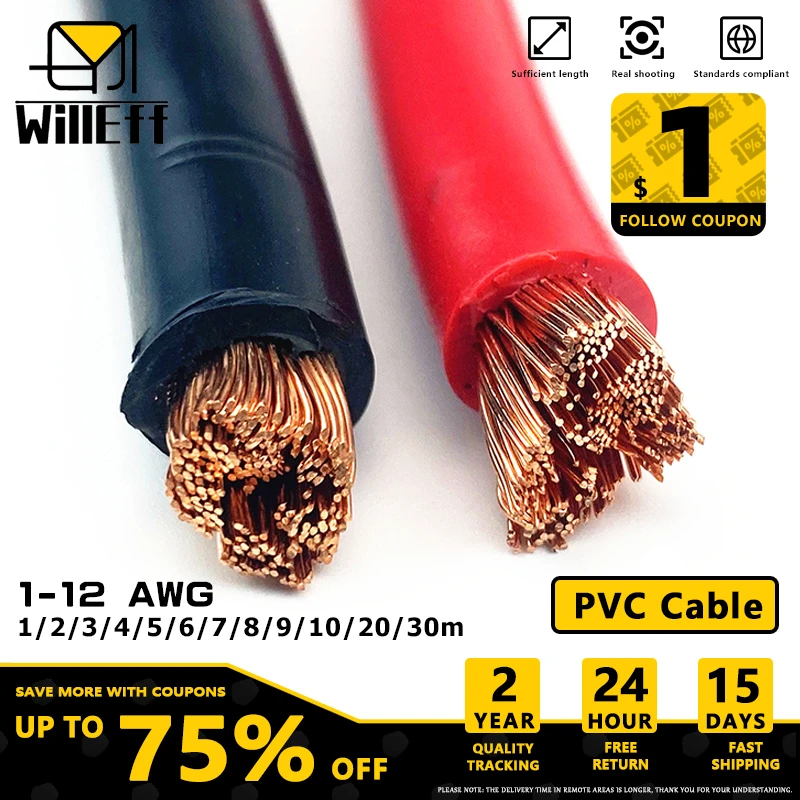
The visible core of these cables consists of oxygen-free pure copper. This material choice is fundamental to electrical performance. Oxygen-free copper minimizes impurities, which directly translates to enhanced electrical conductivity. Reduced resistance is a direct benefit.
For high-current applications, such as car battery jumper cables, the purity of the copper significantly impacts efficiency. Less resistance means less heat generation during current flow, preserving energy. This also extends the lifespan of connected components by reducing thermal stress.
Compared to standard copper alloys or lower-grade conductors, pure copper offers superior electron flow. This is not merely a theoretical advantage; it manifests as tangible performance in demanding scenarios. The stranded winding process, also highlighted, further contributes to flexibility and durability, mitigating the risk of breakage under repeated bending or vibration.
Insulation Integrity: PVC Polyvinyl Chloride Skin
Encasing the copper strands is a PVC (Polyvinyl Chloride) skin. This insulating layer is crucial for safety and operational longevity. The material is specified as having uniform thickness, a key factor in consistent dielectric strength.
PVC insulation provides robust protection against environmental factors, including moisture and abrasion. Its flame-retardant properties are particularly important in automotive or industrial settings where fire hazards are a concern. This material resists ignition and self-extinguishes, preventing rapid flame spread.
Unlike cheaper, less robust insulation materials that can crack or degrade quickly, PVC offers a balance of flexibility and resilience. This ensures the cable maintains its insulating properties over time, even in challenging conditions. The waterproof characteristic further broadens its application scope, allowing for outdoor or damp environment installations without immediate concern for short circuits.
Gauge Versatility: Spanning 1 AWG to 22 AWG
The product offers an extensive range of wire gauges, from 1 AWG down to 22 AWG. This broad selection caters to diverse current requirements. A comprehensive specification table details conductor structure, diameter, and safety current for each gauge.
Selecting the correct wire gauge is paramount for any electrical project. An undersized cable can overheat, leading to insulation breakdown or fire. An oversized cable is unnecessarily bulky and costly. This range allows for precise matching of cable to load.
This versatility distinguishes it from generic cable offerings, which often provide only a limited selection. For a technician, having access to such a wide array of gauges from a single source simplifies procurement. This ensures optimal performance and safety across varied applications.
Performance Metrics: Current Handling and Resistance
Each wire gauge is accompanied by a safety current rating. For instance, 1 AWG is rated for 280A, while 12 AWG handles 30A. These ratings are critical for safe operation. Adhering to these limits prevents thermal overload.
Understanding the conductor structure, such as 987 pcs/0.25mm for 1 AWG, provides insight into the cable's flexibility and current distribution. More strands generally mean greater flexibility and better heat dissipation. This design choice enhances overall cable reliability.
Compared to solid core wires of similar gauge, stranded wire typically exhibits superior fatigue resistance. This makes it ideal for applications involving movement or vibration. The detailed specifications allow for informed decisions regarding load capacity and expected performance.
Application Scope: Beyond Basic Wiring
This cable is marketed for various uses, including power LED applications, car battery jumper wiring, and general electrical connections. Its soft copper construction implies ease of manipulation. This flexibility simplifies installation in confined spaces.
For automotive use, the ability to withstand vibrations and temperature fluctuations is key. The PVC insulation provides this resilience. For LED setups, consistent power delivery prevents flickering or premature component failure.
Unlike rigid, general-purpose building wire, this cable's flexibility makes it suitable for dynamic installations. It adapts well to complex routing paths. This adaptability is a significant advantage in custom electronics projects or vehicle modifications.
Value Proposition: Long-Term Reliability
The combination of pure copper conductors and flame-retardant PVC insulation frames this product as a long-term investment. While the initial cost might be higher than some alternatives, the reduced risk of electrical failure and extended lifespan offer significant savings. Avoiding costly repairs is a priority.
Failing to use appropriate cabling can lead to component damage, safety hazards, and repeated maintenance. This cable aims to mitigate those risks. Its specifications suggest a focus on reliability over mere affordability.
This approach contrasts sharply with disposable, low-cost options that often compromise on material quality. For critical applications, the peace of mind offered by robust construction is invaluable. It ensures consistent operation and minimizes downtime.
Installation and Maintenance Considerations
Proper installation techniques are essential for maximizing cable performance. Stripping the PVC insulation cleanly without nicking the copper strands is crucial. Secure connections prevent resistance buildup. Use appropriate crimping tools for terminals.
Regular inspection of cable runs, especially in high-vibration or high-temperature environments, can prevent issues. Look for signs of insulation degradation or corrosion at termination points. Early detection can prevent major failures.
Unlike poorly insulated cables that can become brittle, the PVC material should retain its flexibility. This makes future adjustments or repairs simpler. Proper cable management, such as using cable ties, also extends its service life.
The Technician's Verdict on Durability
The visual evidence of thick PVC insulation and densely packed copper strands suggests good mechanical durability. The flame-retardant property adds a layer of safety. This cable is built for sustained use.
Its resistance to bending and abrasion, implied by the stranded design and PVC jacket, makes it suitable for demanding environments. This is crucial for applications where cables are frequently moved or exposed. The material choices support a robust design.
Compared to cables with thinner insulation or fewer strands, this product appears more resilient. It should withstand typical wear and tear associated with automotive or industrial applications. This reduces the need for frequent replacements.
Imagine completing a critical wiring project, confident in the integrity of every connection. The pure copper ensures optimal current flow, preventing power loss and overheating. The flame-retardant PVC provides peace of mind, knowing your installation is protected against unexpected hazards. This cable empowers you to build reliable, long-lasting electrical systems, minimizing future troubleshooting and maximizing operational efficiency.