Wireless Smart Switch Actuator Kit
Official Store Deal
Expert Analysis Overview
The Wireless Smart Switch Actuator Kit is a non-invasive home automation solution designed for users seeking to modernize existing lighting infrastructure without complex electrical modifications. This system bypasses traditional wiring requirements, offering a convenient retrofit for a wide array of conventional wall switches. Its primary function is to provide remote control capability, transforming standard mechanical switches into wirelessly operable units. This approach is particularly appealing to renters or individuals hesitant to undertake extensive electrical work, offering a low-commitment entry point into smart home functionality.
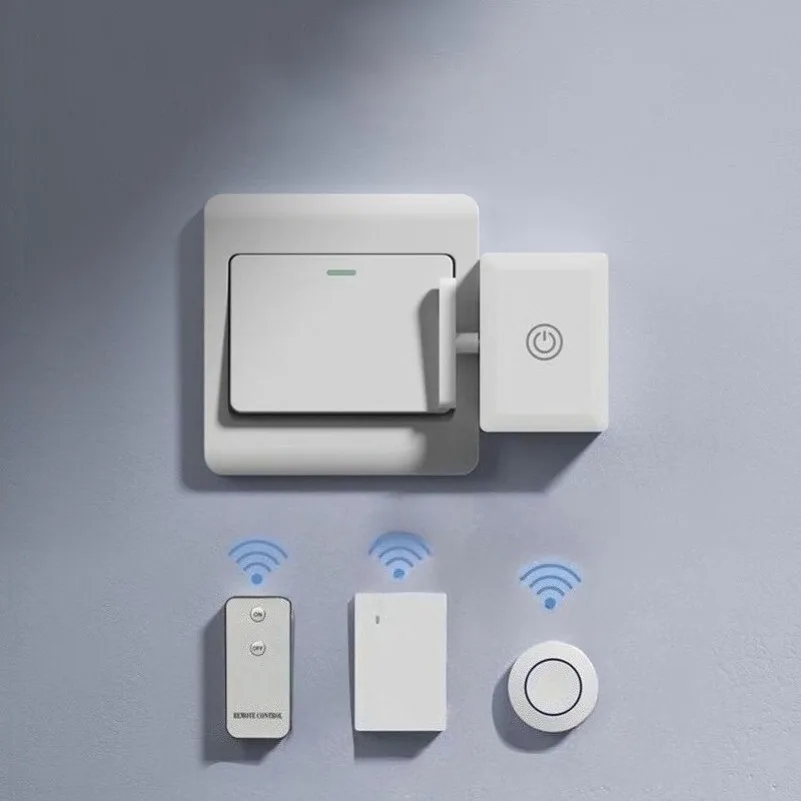
The core of this system is the wireless actuator module, a compact device engineered to physically interact with a standard wall switch. Visible imagery reveals a push-rod mechanism, designed to depress the rocker or toggle of an existing switch. This mechanical interface is a critical design choice.
This physical actuation means the module does not interfere with the electrical wiring of the switch itself. Instead, it acts as a robotic finger, turning the switch on or off as if a person were doing it. This preserves the original switch's functionality, allowing manual operation alongside the new wireless control. It's a simple, effective solution.
Unlike in-wall smart switches that require direct wiring into the electrical circuit, this actuator adheres externally to the switch plate. This eliminates the need for an electrician or specialized tools, significantly reducing installation time and complexity. Traditional smart switches often demand a neutral wire, which many older homes lack, rendering them incompatible. This actuator sidesteps that entire issue.
One of the kit's standout features is its advertised compatibility with a diverse range of existing wall switches. The product images indicate support for single-button, double-button, and three-button switches, as well as bean switches and even those integrated with power sockets. This broad compatibility is a significant advantage.
This versatility ensures that a single solution can address various lighting and appliance control needs throughout a home. Users are not limited to specific switch styles, making it a highly adaptable upgrade. The module's design accommodates button lengths between 36-63mm and button heights of 3-7mm, covering most common switch types.
Many smart home solutions are highly specific, requiring particular switch form factors or electrical configurations. This actuator's ability to work with such a wide variety of existing switches differentiates it. It transforms the limitations of older electrical installations into opportunities for smart upgrades, rather than roadblocks.
The promotional material visually suggests wireless communication, indicated by graphic representations of radio waves and a remote control unit. While the exact protocol (e.g., Wi-Fi, Zigbee, Z-Wave, RF 433MHz) is not explicitly stated, the presence of a dedicated remote often points towards a proprietary RF (Radio Frequency) solution. This implies a direct link between the remote and the actuator.
An RF-based system typically offers straightforward pairing and reliable line-of-sight operation. The advertised 30-meter remote distance suggests a robust signal capable of traversing multiple rooms, which is a practical range for most residential settings. Response latency, a common concern with wireless devices, is generally minimal with direct RF connections, providing near-instantaneous feedback.
For users aiming for deeper integration into a complex Home Assistant setup, an RF-only device might require an additional RF bridge or hub to translate commands into a compatible protocol like Wi-Fi or Zigbee. This is a common consideration for standalone RF devices. Without such a bridge, advanced automations, voice control, or integration with broader smart home ecosystems would be limited. However, for simple remote control, it functions perfectly as a standalone unit.
Local control is a paramount feature for many home automation enthusiasts, ensuring functionality even if internet connectivity is lost. Because this actuator physically manipulates the existing switch, the original manual control remains fully operational. This is a significant benefit.
Even if the wireless system fails, or batteries in the remote die, the light can still be turned on or off by hand. This redundancy is crucial for essential functions like lighting. It prevents a smart home upgrade from becoming a single point of failure.
Many cloud-dependent smart devices cease to function during internet outages, leaving users in the dark. This actuator's design, which preserves the original switch's mechanical integrity, offers a layer of resilience. It ensures that the fundamental utility of the light switch is never compromised, a key advantage over purely digital smart switches.
The installation process for this actuator is remarkably simple, relying on an adhesive backing to secure it to the wall plate. This drill-free, non-invasive method is a core selling point. The imagery clearly shows a protective film being peeled away from the adhesive.
This approach means no tools are required for mounting, and no permanent modifications are made to the wall or electrical system. Users can easily reposition or remove the device without leaving marks or requiring patching and painting. It's ideal for temporary setups or rental properties.
Traditional smart switch installations often involve cutting power, removing existing switches, and wiring in new components. This can be intimidating and requires a basic understanding of electrical work. The adhesive mounting of this actuator simplifies the entire process to a mere 'stick and use,' making smart home technology accessible to a broader audience.
The actuator module exhibits a compact and unobtrusive design, as evidenced by its dimensions of approximately 3.8 x 5.3 x 2.5 cm. Its minimalist white finish is intended to blend seamlessly with most standard light switch plates and wall colors. Small footprint is key.
Its small size means it doesn't significantly protrude from the wall, maintaining a relatively clean aesthetic. While it does add a visible component to the existing switch, its neutral color and simple shape minimize visual impact. This ensures the smart upgrade does not drastically alter the room's decor.
Compared to some bulkier smart home devices, this actuator's compact design is a deliberate choice for discrete integration. It aims to enhance functionality without drawing undue attention to the technology itself. This thoughtful design consideration is crucial for products intended to be integrated into everyday living spaces.
The kit includes a dedicated wireless remote control, featuring clear 'ON' and 'OFF' buttons. The remote measures approximately 4 x 8.6 cm, suggesting a comfortable, handheld form factor. A physical remote offers immediate tactile feedback.
Having a dedicated physical remote provides a tangible and reliable control method, particularly useful when a smartphone is not readily available or for users who prefer traditional button presses. The simplicity of 'ON' and 'OFF' functions makes it intuitive for all age groups. It's a straightforward interface.
While many smart home systems push for smartphone-only control, a physical remote offers a distinct advantage in terms of accessibility and immediacy. It bypasses app loading times and device unlocking, providing instant control. This is a crucial consideration for quick actions or for guests who may not have access to the primary smart home app.
The advertised 30-meter remote distance implies robust signal penetration through walls and floors, enabling multi-room control. This means a single remote could potentially operate actuators in adjacent rooms or even on different floors, depending on building materials and layout. A wide range is highly practical.
This capability enhances the convenience factor, allowing users to control lights from various points within their home without needing to be in the same room as the switch. Imagine turning off a basement light from the upstairs bedroom. Such flexibility is a hallmark of effective home automation.
Unlike solutions that rely on line-of-sight infrared (IR) signals, an RF-based system provides superior penetration. This allows for truly flexible placement of the remote, whether it's kept on a bedside table, a coffee table, or even carried from room to room. It truly enables whole-house control from a single point.
Given the compact, wireless nature of both the actuator and the remote, it is highly probable that both units are battery-powered. The absence of visible power cables or charging ports reinforces this assumption. Battery operation offers placement flexibility.
Battery power provides unparalleled flexibility in placement, as neither unit is tethered to a power outlet. However, this convenience comes with the requirement for periodic battery replacement. The frequency of replacement would depend on usage patterns and the efficiency of the internal electronics. Users should anticipate this maintenance task.
Many wired smart switches draw power directly from the electrical circuit, eliminating battery concerns. This actuator, by contrast, trades installation simplicity for ongoing battery management. Users must weigh the ease of installation against the eventual need to replace batteries in both the actuator and the remote. This is a common trade-off in wireless, non-invasive devices.
At a price point of approximately 5.96 USD, this wireless switch actuator kit represents an exceptionally affordable entry into home automation. This low cost significantly reduces the barrier to entry for smart lighting. It is a budget-friendly option.
The value proposition extends beyond the initial purchase price, considering the cost savings on professional installation. By eliminating the need for an electrician and complex wiring, the overall expenditure for converting a standard switch to a smart-enabled one is drastically reduced. This makes smart home upgrades accessible to a wider demographic.
Compared to higher-cost, professionally installed smart home systems that can run into hundreds or thousands of dollars per switch, this kit offers a highly economical alternative. While it may not provide the same depth of integration or advanced features, its core function of remote control is delivered at an unmatched price-to-performance ratio for non-invasive solutions. It provides a practical, low-risk way to experiment with smart home concepts.
Imagine walking into your home after a long day, effortlessly turning on the lights in the living room without fumbling for switches, or dimming the bedroom lights from the comfort of your bed. This system promises to deliver a new level of convenience and control over your living environment, making everyday tasks simpler and more intuitive. The flexibility of placing control exactly where it is needed, without the hassle of rewiring, transforms a house into a truly responsive home. It's about enhancing comfort and efficiency, one switch at a time.
Retrofitting Existing Infrastructure: The Actuation Mechanism
The core of this system is the wireless actuator module, a compact device engineered to physically interact with a standard wall switch. Visible imagery reveals a push-rod mechanism, designed to depress the rocker or toggle of an existing switch. This mechanical interface is a critical design choice.
This physical actuation means the module does not interfere with the electrical wiring of the switch itself. Instead, it acts as a robotic finger, turning the switch on or off as if a person were doing it. This preserves the original switch's functionality, allowing manual operation alongside the new wireless control. It's a simple, effective solution.
Unlike in-wall smart switches that require direct wiring into the electrical circuit, this actuator adheres externally to the switch plate. This eliminates the need for an electrician or specialized tools, significantly reducing installation time and complexity. Traditional smart switches often demand a neutral wire, which many older homes lack, rendering them incompatible. This actuator sidesteps that entire issue.
Broad Switch Compatibility
One of the kit's standout features is its advertised compatibility with a diverse range of existing wall switches. The product images indicate support for single-button, double-button, and three-button switches, as well as bean switches and even those integrated with power sockets. This broad compatibility is a significant advantage.
This versatility ensures that a single solution can address various lighting and appliance control needs throughout a home. Users are not limited to specific switch styles, making it a highly adaptable upgrade. The module's design accommodates button lengths between 36-63mm and button heights of 3-7mm, covering most common switch types.
Many smart home solutions are highly specific, requiring particular switch form factors or electrical configurations. This actuator's ability to work with such a wide variety of existing switches differentiates it. It transforms the limitations of older electrical installations into opportunities for smart upgrades, rather than roadblocks.
Wireless Protocol and Integration Potential
The promotional material visually suggests wireless communication, indicated by graphic representations of radio waves and a remote control unit. While the exact protocol (e.g., Wi-Fi, Zigbee, Z-Wave, RF 433MHz) is not explicitly stated, the presence of a dedicated remote often points towards a proprietary RF (Radio Frequency) solution. This implies a direct link between the remote and the actuator.
An RF-based system typically offers straightforward pairing and reliable line-of-sight operation. The advertised 30-meter remote distance suggests a robust signal capable of traversing multiple rooms, which is a practical range for most residential settings. Response latency, a common concern with wireless devices, is generally minimal with direct RF connections, providing near-instantaneous feedback.
For users aiming for deeper integration into a complex Home Assistant setup, an RF-only device might require an additional RF bridge or hub to translate commands into a compatible protocol like Wi-Fi or Zigbee. This is a common consideration for standalone RF devices. Without such a bridge, advanced automations, voice control, or integration with broader smart home ecosystems would be limited. However, for simple remote control, it functions perfectly as a standalone unit.
Ensuring Local Control Capability
Local control is a paramount feature for many home automation enthusiasts, ensuring functionality even if internet connectivity is lost. Because this actuator physically manipulates the existing switch, the original manual control remains fully operational. This is a significant benefit.
Even if the wireless system fails, or batteries in the remote die, the light can still be turned on or off by hand. This redundancy is crucial for essential functions like lighting. It prevents a smart home upgrade from becoming a single point of failure.
Many cloud-dependent smart devices cease to function during internet outages, leaving users in the dark. This actuator's design, which preserves the original switch's mechanical integrity, offers a layer of resilience. It ensures that the fundamental utility of the light switch is never compromised, a key advantage over purely digital smart switches.
Installation Simplicity and Design Considerations
The installation process for this actuator is remarkably simple, relying on an adhesive backing to secure it to the wall plate. This drill-free, non-invasive method is a core selling point. The imagery clearly shows a protective film being peeled away from the adhesive.
This approach means no tools are required for mounting, and no permanent modifications are made to the wall or electrical system. Users can easily reposition or remove the device without leaving marks or requiring patching and painting. It's ideal for temporary setups or rental properties.
Traditional smart switch installations often involve cutting power, removing existing switches, and wiring in new components. This can be intimidating and requires a basic understanding of electrical work. The adhesive mounting of this actuator simplifies the entire process to a mere 'stick and use,' making smart home technology accessible to a broader audience.
Compact Form Factor and Aesthetic Integration
The actuator module exhibits a compact and unobtrusive design, as evidenced by its dimensions of approximately 3.8 x 5.3 x 2.5 cm. Its minimalist white finish is intended to blend seamlessly with most standard light switch plates and wall colors. Small footprint is key.
Its small size means it doesn't significantly protrude from the wall, maintaining a relatively clean aesthetic. While it does add a visible component to the existing switch, its neutral color and simple shape minimize visual impact. This ensures the smart upgrade does not drastically alter the room's decor.
Compared to some bulkier smart home devices, this actuator's compact design is a deliberate choice for discrete integration. It aims to enhance functionality without drawing undue attention to the technology itself. This thoughtful design consideration is crucial for products intended to be integrated into everyday living spaces.
Remote Control Ergonomics and Range
The kit includes a dedicated wireless remote control, featuring clear 'ON' and 'OFF' buttons. The remote measures approximately 4 x 8.6 cm, suggesting a comfortable, handheld form factor. A physical remote offers immediate tactile feedback.
Having a dedicated physical remote provides a tangible and reliable control method, particularly useful when a smartphone is not readily available or for users who prefer traditional button presses. The simplicity of 'ON' and 'OFF' functions makes it intuitive for all age groups. It's a straightforward interface.
While many smart home systems push for smartphone-only control, a physical remote offers a distinct advantage in terms of accessibility and immediacy. It bypasses app loading times and device unlocking, providing instant control. This is a crucial consideration for quick actions or for guests who may not have access to the primary smart home app.
Multi-Room Control Capability
The advertised 30-meter remote distance implies robust signal penetration through walls and floors, enabling multi-room control. This means a single remote could potentially operate actuators in adjacent rooms or even on different floors, depending on building materials and layout. A wide range is highly practical.
This capability enhances the convenience factor, allowing users to control lights from various points within their home without needing to be in the same room as the switch. Imagine turning off a basement light from the upstairs bedroom. Such flexibility is a hallmark of effective home automation.
Unlike solutions that rely on line-of-sight infrared (IR) signals, an RF-based system provides superior penetration. This allows for truly flexible placement of the remote, whether it's kept on a bedside table, a coffee table, or even carried from room to room. It truly enables whole-house control from a single point.
Power Source and Maintenance Implications
Given the compact, wireless nature of both the actuator and the remote, it is highly probable that both units are battery-powered. The absence of visible power cables or charging ports reinforces this assumption. Battery operation offers placement flexibility.
Battery power provides unparalleled flexibility in placement, as neither unit is tethered to a power outlet. However, this convenience comes with the requirement for periodic battery replacement. The frequency of replacement would depend on usage patterns and the efficiency of the internal electronics. Users should anticipate this maintenance task.
Many wired smart switches draw power directly from the electrical circuit, eliminating battery concerns. This actuator, by contrast, trades installation simplicity for ongoing battery management. Users must weigh the ease of installation against the eventual need to replace batteries in both the actuator and the remote. This is a common trade-off in wireless, non-invasive devices.
Value Proposition and Longevity
At a price point of approximately 5.96 USD, this wireless switch actuator kit represents an exceptionally affordable entry into home automation. This low cost significantly reduces the barrier to entry for smart lighting. It is a budget-friendly option.
The value proposition extends beyond the initial purchase price, considering the cost savings on professional installation. By eliminating the need for an electrician and complex wiring, the overall expenditure for converting a standard switch to a smart-enabled one is drastically reduced. This makes smart home upgrades accessible to a wider demographic.
Compared to higher-cost, professionally installed smart home systems that can run into hundreds or thousands of dollars per switch, this kit offers a highly economical alternative. While it may not provide the same depth of integration or advanced features, its core function of remote control is delivered at an unmatched price-to-performance ratio for non-invasive solutions. It provides a practical, low-risk way to experiment with smart home concepts.
Imagine walking into your home after a long day, effortlessly turning on the lights in the living room without fumbling for switches, or dimming the bedroom lights from the comfort of your bed. This system promises to deliver a new level of convenience and control over your living environment, making everyday tasks simpler and more intuitive. The flexibility of placing control exactly where it is needed, without the hassle of rewiring, transforms a house into a truly responsive home. It's about enhancing comfort and efficiency, one switch at a time.