Yooperlite Fluorescent Sodalite Tumbled Stones
Official Store Deal
Expert Analysis Overview
The Raw Mineralogy of Syenite
Yooperlite Tumbled Stones are a high-contrast mineral specimen consisting of syenite clasts enriched with fluorescent sodalite, designed for collectors who prioritize geological rarity over synthetic decor. These stones present a stark dichotomy. Under standard daylight, the material appears as a mundane, grey-speckled rock. It resembles common granite. This muted palette fits a minimalist aesthetic perfectly. The stones don't scream for attention. They sit quietly on a desk or shelf. They integrate into a neutral environment without disrupting the visual flow of a room.
Syenite is an intrusive igneous rock. It forms deep underground. Unlike granite, syenite lacks significant quartz. The primary minerals are alkali feldspar and hornblende. These minerals provide the stone with its dense, substantial weight. When held, the stone feels solid. It is cool to the touch. The tumble process rounds the sharp edges. This creates a pebble-like silhouette. The surface texture is smooth but retains a natural grain. It isn't slippery like glass. It has grip.
Compared to common river rocks, these specimens carry a hidden chemical property. The sodalite inclusions are the defining feature. Sodalite is a chloric sodium aluminum silicate. In these specific stones, the sodalite is distributed in irregular patches. These patches are invisible to the naked eye under full-spectrum light. This makes the stone a perfect 'hidden' feature in a modern home. It serves as a conversation piece that only reveals its true nature under specific conditions. It rewards the observant user.
The Luminescent Threshold
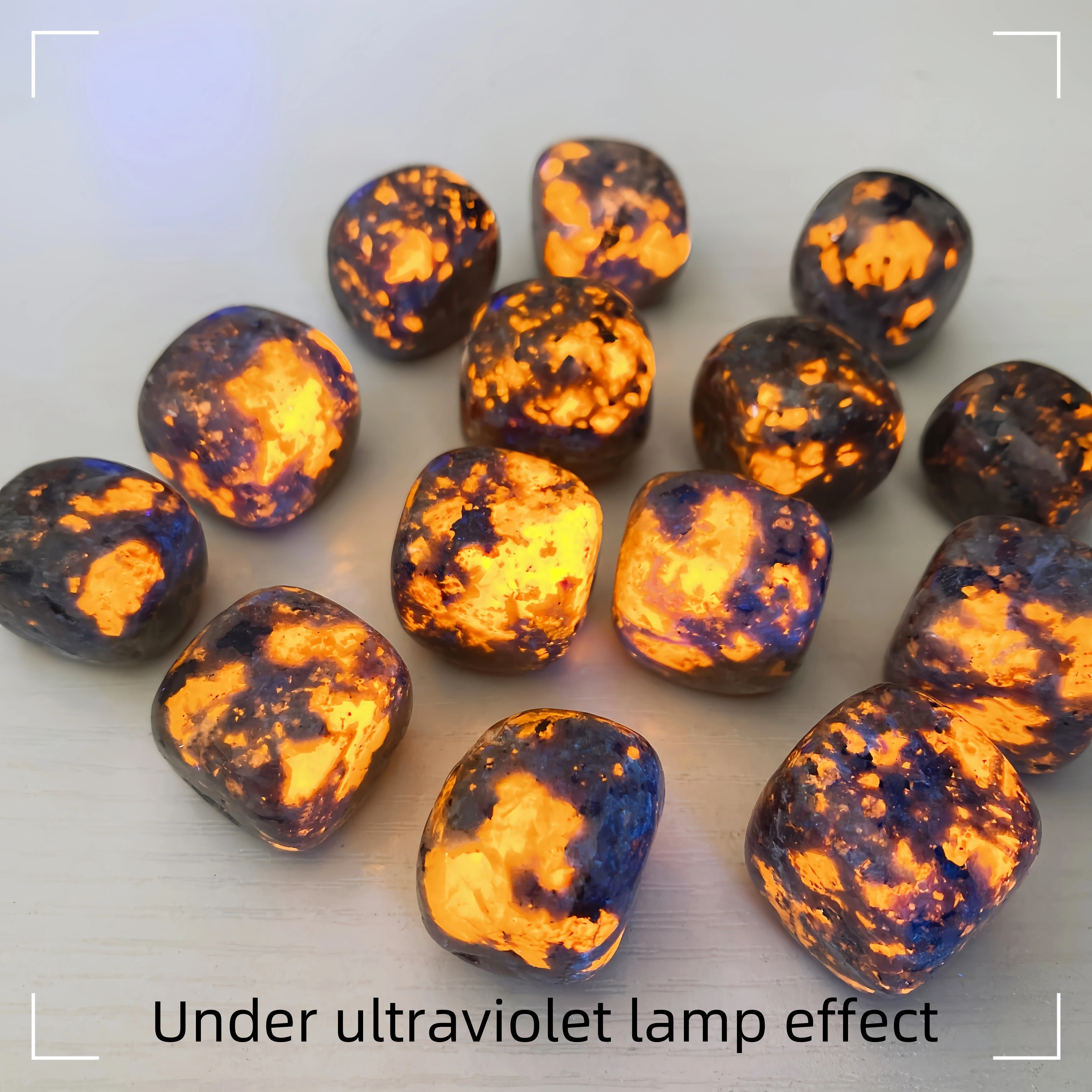
When a 365nm ultraviolet light source strikes the surface, the physics of the stone change. The atoms within the sodalite inclusions absorb the high-energy UV photons. They immediately re-emit that energy at a longer wavelength. This is fluorescence. The result is a vibrant, fiery orange glow. The stones appear to contain molten lava. The effect is visceral. It looks like glowing embers in a dying fire. The contrast between the dark syenite matrix and the glowing sodalite is sharp. There is no middle ground. It is either grey or fire.
For the best visual results, a filtered 365nm UV torch is required. Standard blacklight bulbs or 395nm LEDs often produce too much visible purple light. This purple light washes out the orange glow. A dedicated 365nm light isolates the reaction. It makes the orange pop against a pitch-black background. This transformation provides a sensory experience that standard decor cannot match. It is a dynamic interaction with light. The glow isn't static. It shifts as the light source moves. It creates a sense of depth within the stone.
Unlike painted or synthetic 'glow-in-the-dark' items, this fluorescence is an intrinsic property of the mineral. It will never fade. It doesn't need to 'charge' in the sun. As long as the UV light is present, the glow is active. This permanence is a hallmark of high-quality mineral specimens. It ensures the value of the stone remains consistent over time. It is a long-term investment in natural art.
Curation in Minimalist Spaces
A collection of these stones works best when grouped in a low-profile vessel. A matte black ceramic tray or a clear glass bowl is ideal. Avoid ornate containers. The stones are the focus. In a minimalist workspace, a single stone can serve as a tactile focus tool. It fits the hand well. The rounded edges are soothing to touch during deep work. It functions as a modern worry stone. Its weight is grounding.
Because the stones are naturally occurring, no two are identical. This provides a sense of organic variety within a structured environment. Some stones have large 'flame' patches. Others have fine, stardust-like speckles of sodalite. This variation prevents the display from looking manufactured. It brings a piece of the Michigan shoreline or the geological depths into the home. It is raw nature refined by a tumble. The stones are small. They don't take up space. They add detail without adding clutter.
Using these stones as a diffuser is a functional secondary use. Because syenite is slightly porous compared to polished gemstones, it can hold essential oils. A few drops on the surface will slowly evaporate. This allows the stone to serve a dual purpose. It is a visual specimen and an olfactory tool. The grey color doesn't stain easily from clear oils. It is a practical choice for a clean home.
Sensory Weight and Tactile Satisfaction
The density of these stones is a significant part of the experience. They feel heavier than they look. This 'heft' communicates quality. Thin, lightweight stones often feel like plastic or cheap slag. These feel like the Earth. They have a high thermal mass. This means they stay cool in a warm room. This temperature difference is noticeable when the stone is picked up. It provides a brief moment of sensory reset. It is a physical anchor.
In terms of maintenance, the stones are incredibly durable. Syenite has a Mohs hardness of approximately 6 to 6.5. It won't shatter if dropped on a carpet. It won't scratch from fingernails. It is tougher than glass. This durability means the stones can be handled frequently. They are not 'delicate' crystals that require gloves. They are meant to be touched. They are meant to be used.
Unlike shiny, high-gloss polished quartz, these stones have a semi-matte finish. This reduces glare. In a brightly lit office, they don't create distracting reflections. They absorb light. This makes the eventual UV transformation even more surprising. It is a masterclass in understated design. The transition from dull grey to brilliant orange is the ultimate visual payoff. It is a reward for the curious mind.
The Science of Sodalite Inclusions
The discovery of these stones is relatively recent in the geological world. Originally popularized as 'Yooperlites' from the Upper Peninsula of Michigan, similar specimens are now found in other volcanic regions. The specific geological conditions required to trap sodalite within syenite are rare. It requires a magma chamber with high sodium and chlorine levels but low silica. This specific chemistry is what creates the 'Flame Stone' effect. It is a snapshot of volcanic history. Each stone is millions of years old.
Understanding the wavelength of light is key to enjoying the product. Most people own 'blacklights' that operate at 395nm. While these will make the stones glow, the effect is muddy. The 365nm wavelength is the 'sweet spot' for sodalite. It hits the electrons with the exact energy needed to jump to the next shell. When they fall back, they release the orange light. This is an educational tool for children and adults alike. It demonstrates the invisible spectrum of light. It turns a living room into a laboratory.
Compared to artificial decor, these minerals offer a connection to the planet. They are not mass-produced in a factory. They are harvested and polished. This origin story adds value. It gives the object a narrative. In a world of disposable plastic, a stone is permanent. It will outlast the desk it sits on. It is a timeless addition to any collection.
Imagine sitting in a dimly lit study at night. You reach for a small UV torch and sweep it across a bowl of grey pebbles on your coffee table. Instantly, the room is punctuated by glowing orange embers that seem to burn with an internal heat. This visual transformation creates a moment of wonder that breaks the monotony of daily life, offering a tactile and optical escape that resides right on your tabletop.