ZigBee mmWave Motion, Temperature, and Humidity Sensor
Official Store Deal
Expert Analysis Overview
The ZigBee mmWave Motion, Temperature, and Humidity Sensor is a sophisticated environmental and presence detection device engineered for advanced smart home enthusiasts seeking granular control and robust automation capabilities. Unlike traditional passive infrared (PIR) sensors that rely on heat signatures and broad movements, this unit leverages cutting-edge millimeter-wave (mmWave) radar technology. This allows for an unparalleled level of sensitivity, detecting even the most subtle micro-movements, such as breathing, within its detection zone. This precision is critical for maintaining accurate occupancy data in rooms, preventing lights from inadvertently turning off when someone is merely reading or working quietly. The sensor's ability to discern static presence marks a significant leap from older technologies.
The core of this sensor's advanced functionality lies in its 10.525GHz mmWave radar. This frequency enables it to penetrate light obstructions, offering superior detection compared to line-of-sight PIR sensors. The detection angle extends to 110° ±10°, covering a broad area, while the adjustable detection distance, ranging from 0.5 to 10 meters, provides flexibility for various room sizes and applications. Such granular control over the detection zone minimizes false positives, a common frustration with less sophisticated motion detectors. This means fewer instances of unwanted lights activating or security alerts triggering due to pets or environmental shifts. Precision is key.
Compared to standard entry-level PIR motion sensors, which often trigger only on significant movement, this mmWave variant provides a far more nuanced understanding of room occupancy. Traditional sensors frequently suffer from "false negatives" where a person remains still, causing automated lights to switch off prematurely. The mmWave sensor eliminates this common annoyance by continuously monitoring for subtle signs of life. This ensures a truly seamless smart home experience, where automation responds to actual presence, not just fleeting motion. It creates a more intuitive and responsive living space.
Operating on the ZigBee 3.0 protocol, this sensor offers a robust and energy-efficient communication backbone for smart home networks. ZigBee's mesh networking capability ensures that signals can hop between devices, extending the range and reliability of the entire system. This protocol is highly favored by home automation engineers due to its local control capabilities, meaning devices can operate without constant reliance on cloud servers, enhancing privacy and reducing latency. Setup is straightforward.
Crucially, the sensor explicitly supports integration with Home Assistant via Zigbee2mqtt. This compatibility is a significant advantage for users who prioritize local control and advanced customization. Zigbee2mqtt acts as a bridge, translating ZigBee device communications into MQTT messages, which Home Assistant can then easily consume. This direct integration allows for complex automation rules, data logging, and dashboard visualization without vendor lock-in. It truly unlocks potential.
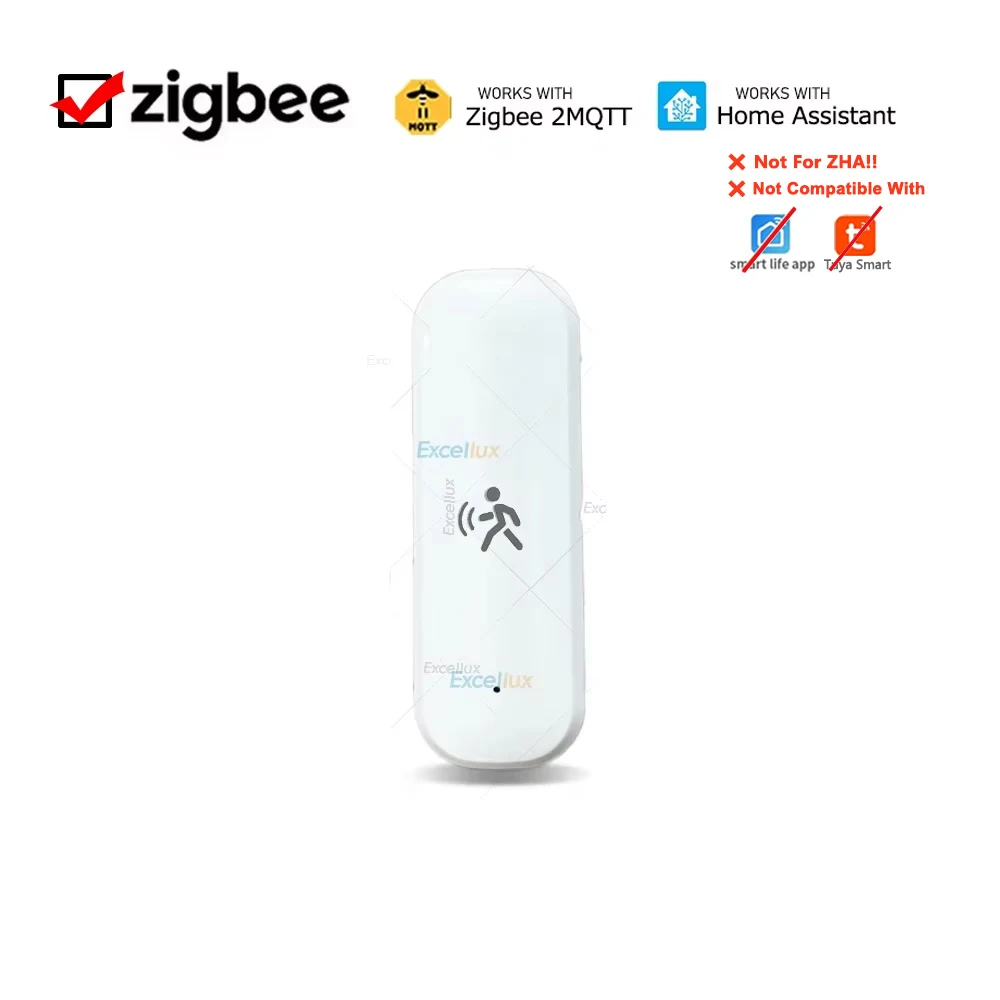
However, it is important to note the stated incompatibilities: "Not For ZHA" and "Not Compatible with SmartThings." This strategic transparency clarifies that while the device is ZigBee 3.0, its optimized integration path is through Zigbee2mqtt for Home Assistant. Unlike generic ZigBee devices that aim for broad compatibility, this sensor targets a specific, technically proficient user base that values deep integration over plug-and-play simplicity with mainstream hubs. This focus ensures stability.
Beyond motion detection, this device incorporates temperature and humidity sensing, providing valuable environmental data for comprehensive climate control. The temperature resolution of 0.1°C and an accuracy of ±0.3°C, coupled with a humidity resolution of 1% and accuracy of ±3%, indicates a reliable measurement capability. These readings are crucial for maintaining optimal indoor conditions. Data is precise.
Integrating these environmental metrics into a smart home system allows for sophisticated automation scenarios. For instance, the sensor can trigger smart thermostats or HVAC systems to adjust temperature when a room becomes occupied, or activate dehumidifiers if humidity levels exceed a comfortable threshold. This proactive climate management enhances comfort and can contribute to energy savings by ensuring heating or cooling operates only when necessary. It makes spaces smarter.
Furthermore, the inclusion of a luminance meter with a range of 0-3000 Lux adds another layer of intelligence. This enables light-aware automation, such as only activating lights when both motion is detected *and* the ambient light level falls below a certain threshold. This prevents unnecessary lighting during daylight hours, further optimizing energy consumption. This saves power.
For security applications, the mmWave sensor's precision and rapid response are invaluable. Its ability to detect subtle movements means it can identify intruders even if they are attempting to remain still or move slowly. The instant app notifications, as depicted in the product imagery, ensure that users are immediately alerted to potential breaches. Immediate alerts matter.
When integrated with an alarm siren or smart lighting through Home Assistant, the sensor can trigger immediate deterrents. Imagine a scenario where motion is detected outside a window at night; the system could automatically flash exterior lights, activate an alarm, and send a notification to the homeowner's smartphone. This multi-layered response can effectively scare away potential threats before they escalate. It provides peace of mind.
Unlike simpler motion detectors that might be easily circumvented or produce frequent false alarms, the mmWave technology's ability to differentiate between subtle environmental shifts and actual human presence enhances its reliability for security. Its robust detection capability makes it a strong component in a comprehensive home security strategy, providing an extra layer of vigilance. This enhances safety.
The combination of motion, temperature, humidity, and luminance data from a single compact device opens up a vast array of automation possibilities. For instance, a complex automation routine could be configured to: if motion is detected in the living room, and the luminance is below 100 Lux, and the temperature is below 22°C, then turn on the living room lights to 50% brightness and adjust the thermostat to 23°C. This level of conditional logic is where the sensor truly shines. It supports complex logic.
Home Assistant users, particularly those leveraging Zigbee2mqtt, will find the data streams from this sensor incredibly versatile. The low latency inherent in ZigBee 3.0 ensures that these automation triggers execute almost instantaneously, providing a truly responsive smart home experience. This is critical for applications like lighting control, where perceptible delays can diminish the user experience. Responsiveness is paramount.
This sensor allows users to move beyond basic on/off automation to create truly intelligent environments that adapt dynamically to occupancy and environmental conditions. It empowers the creation of personalized comfort zones and energy-efficient routines that respond to the nuances of daily life. This optimizes daily living.
The sensor is powered by two AAA batteries, providing a convenient and wire-free installation. The specifications indicate a standby current of less than 90uA and a remarkable standby time of approximately 28 months. This extended battery life minimizes maintenance requirements, allowing for long periods of uninterrupted operation. Battery life is significant.
Such low power consumption is a hallmark of well-implemented ZigBee devices, which are designed for efficiency within a mesh network. The ability to operate for over two years on a single set of batteries makes this sensor a 'set it and forget it' component for most users. This reduces ongoing costs and hassle. It is truly efficient.
Compared to Wi-Fi-based sensors that often require frequent recharging or direct power connections, the battery-powered ZigBee design offers superior placement flexibility and reliability during power outages. The choice of AAA batteries, a readily available and inexpensive power source, further enhances its practicality. This makes upkeep easy.
With compact dimensions of 68mm x 23mm x 19mm, the sensor boasts a discreet and unobtrusive design. Its small form factor allows for versatile placement options, whether mounted on a wall, tucked away on a shelf, or integrated into furniture without drawing attention. Its small size is an asset.
The minimalist white casing blends seamlessly into most interior decors, ensuring that the technology complements the aesthetic of the home rather than detracting from it. The ability to hide the sensor effectively is crucial for both security applications and maintaining a clean, modern smart home appearance. It looks good anywhere.
Unlike bulkier sensors that can be challenging to position optimally, this compact design offers maximum flexibility. Users can experiment with various mounting locations to achieve the desired detection coverage and minimize false triggers, ensuring the sensor performs its intended function effectively and discreetly. This makes placement simple.
This ZigBee mmWave motion, temperature, and humidity sensor represents a strategic investment for the discerning smart home enthusiast. Its advanced detection capabilities, combined with comprehensive environmental monitoring and robust Home Assistant/Zigbee2mqtt integration, provide a level of control and automation far beyond basic smart devices. The long battery life and discreet design further enhance its appeal as a foundational component for a truly intelligent living space. Imagine a home that anticipates your needs, adjusts its environment for optimal comfort, and vigilantly protects your space with precision, all orchestrated seamlessly by a device that understands presence, not just movement. This sensor is a critical enabler for that future, allowing you to build sophisticated, responsive automation routines that truly elevate your smart home experience, ensuring every interaction is fluid and intuitive. It empowers a smarter home.
The core of this sensor's advanced functionality lies in its 10.525GHz mmWave radar. This frequency enables it to penetrate light obstructions, offering superior detection compared to line-of-sight PIR sensors. The detection angle extends to 110° ±10°, covering a broad area, while the adjustable detection distance, ranging from 0.5 to 10 meters, provides flexibility for various room sizes and applications. Such granular control over the detection zone minimizes false positives, a common frustration with less sophisticated motion detectors. This means fewer instances of unwanted lights activating or security alerts triggering due to pets or environmental shifts. Precision is key.
Compared to standard entry-level PIR motion sensors, which often trigger only on significant movement, this mmWave variant provides a far more nuanced understanding of room occupancy. Traditional sensors frequently suffer from "false negatives" where a person remains still, causing automated lights to switch off prematurely. The mmWave sensor eliminates this common annoyance by continuously monitoring for subtle signs of life. This ensures a truly seamless smart home experience, where automation responds to actual presence, not just fleeting motion. It creates a more intuitive and responsive living space.
Seamless Integration: The Home Assistant Ecosystem
Operating on the ZigBee 3.0 protocol, this sensor offers a robust and energy-efficient communication backbone for smart home networks. ZigBee's mesh networking capability ensures that signals can hop between devices, extending the range and reliability of the entire system. This protocol is highly favored by home automation engineers due to its local control capabilities, meaning devices can operate without constant reliance on cloud servers, enhancing privacy and reducing latency. Setup is straightforward.
Crucially, the sensor explicitly supports integration with Home Assistant via Zigbee2mqtt. This compatibility is a significant advantage for users who prioritize local control and advanced customization. Zigbee2mqtt acts as a bridge, translating ZigBee device communications into MQTT messages, which Home Assistant can then easily consume. This direct integration allows for complex automation rules, data logging, and dashboard visualization without vendor lock-in. It truly unlocks potential.
However, it is important to note the stated incompatibilities: "Not For ZHA" and "Not Compatible with SmartThings." This strategic transparency clarifies that while the device is ZigBee 3.0, its optimized integration path is through Zigbee2mqtt for Home Assistant. Unlike generic ZigBee devices that aim for broad compatibility, this sensor targets a specific, technically proficient user base that values deep integration over plug-and-play simplicity with mainstream hubs. This focus ensures stability.
Environmental Intelligence: More Than Just Movement
Beyond motion detection, this device incorporates temperature and humidity sensing, providing valuable environmental data for comprehensive climate control. The temperature resolution of 0.1°C and an accuracy of ±0.3°C, coupled with a humidity resolution of 1% and accuracy of ±3%, indicates a reliable measurement capability. These readings are crucial for maintaining optimal indoor conditions. Data is precise.
Integrating these environmental metrics into a smart home system allows for sophisticated automation scenarios. For instance, the sensor can trigger smart thermostats or HVAC systems to adjust temperature when a room becomes occupied, or activate dehumidifiers if humidity levels exceed a comfortable threshold. This proactive climate management enhances comfort and can contribute to energy savings by ensuring heating or cooling operates only when necessary. It makes spaces smarter.
Furthermore, the inclusion of a luminance meter with a range of 0-3000 Lux adds another layer of intelligence. This enables light-aware automation, such as only activating lights when both motion is detected *and* the ambient light level falls below a certain threshold. This prevents unnecessary lighting during daylight hours, further optimizing energy consumption. This saves power.
Security Layering: Proactive Threat Deterrence
For security applications, the mmWave sensor's precision and rapid response are invaluable. Its ability to detect subtle movements means it can identify intruders even if they are attempting to remain still or move slowly. The instant app notifications, as depicted in the product imagery, ensure that users are immediately alerted to potential breaches. Immediate alerts matter.
When integrated with an alarm siren or smart lighting through Home Assistant, the sensor can trigger immediate deterrents. Imagine a scenario where motion is detected outside a window at night; the system could automatically flash exterior lights, activate an alarm, and send a notification to the homeowner's smartphone. This multi-layered response can effectively scare away potential threats before they escalate. It provides peace of mind.
Unlike simpler motion detectors that might be easily circumvented or produce frequent false alarms, the mmWave technology's ability to differentiate between subtle environmental shifts and actual human presence enhances its reliability for security. Its robust detection capability makes it a strong component in a comprehensive home security strategy, providing an extra layer of vigilance. This enhances safety.
Architecting Automation: Crafting Responsive Routines
The combination of motion, temperature, humidity, and luminance data from a single compact device opens up a vast array of automation possibilities. For instance, a complex automation routine could be configured to: if motion is detected in the living room, and the luminance is below 100 Lux, and the temperature is below 22°C, then turn on the living room lights to 50% brightness and adjust the thermostat to 23°C. This level of conditional logic is where the sensor truly shines. It supports complex logic.
Home Assistant users, particularly those leveraging Zigbee2mqtt, will find the data streams from this sensor incredibly versatile. The low latency inherent in ZigBee 3.0 ensures that these automation triggers execute almost instantaneously, providing a truly responsive smart home experience. This is critical for applications like lighting control, where perceptible delays can diminish the user experience. Responsiveness is paramount.
This sensor allows users to move beyond basic on/off automation to create truly intelligent environments that adapt dynamically to occupancy and environmental conditions. It empowers the creation of personalized comfort zones and energy-efficient routines that respond to the nuances of daily life. This optimizes daily living.
Powering the Smart Home: Endurance and Efficiency
The sensor is powered by two AAA batteries, providing a convenient and wire-free installation. The specifications indicate a standby current of less than 90uA and a remarkable standby time of approximately 28 months. This extended battery life minimizes maintenance requirements, allowing for long periods of uninterrupted operation. Battery life is significant.
Such low power consumption is a hallmark of well-implemented ZigBee devices, which are designed for efficiency within a mesh network. The ability to operate for over two years on a single set of batteries makes this sensor a 'set it and forget it' component for most users. This reduces ongoing costs and hassle. It is truly efficient.
Compared to Wi-Fi-based sensors that often require frequent recharging or direct power connections, the battery-powered ZigBee design offers superior placement flexibility and reliability during power outages. The choice of AAA batteries, a readily available and inexpensive power source, further enhances its practicality. This makes upkeep easy.
Physical Footprint and Installation Versatility
With compact dimensions of 68mm x 23mm x 19mm, the sensor boasts a discreet and unobtrusive design. Its small form factor allows for versatile placement options, whether mounted on a wall, tucked away on a shelf, or integrated into furniture without drawing attention. Its small size is an asset.
The minimalist white casing blends seamlessly into most interior decors, ensuring that the technology complements the aesthetic of the home rather than detracting from it. The ability to hide the sensor effectively is crucial for both security applications and maintaining a clean, modern smart home appearance. It looks good anywhere.
Unlike bulkier sensors that can be challenging to position optimally, this compact design offers maximum flexibility. Users can experiment with various mounting locations to achieve the desired detection coverage and minimize false triggers, ensuring the sensor performs its intended function effectively and discreetly. This makes placement simple.
The Strategic Value Proposition
This ZigBee mmWave motion, temperature, and humidity sensor represents a strategic investment for the discerning smart home enthusiast. Its advanced detection capabilities, combined with comprehensive environmental monitoring and robust Home Assistant/Zigbee2mqtt integration, provide a level of control and automation far beyond basic smart devices. The long battery life and discreet design further enhance its appeal as a foundational component for a truly intelligent living space. Imagine a home that anticipates your needs, adjusts its environment for optimal comfort, and vigilantly protects your space with precision, all orchestrated seamlessly by a device that understands presence, not just movement. This sensor is a critical enabler for that future, allowing you to build sophisticated, responsive automation routines that truly elevate your smart home experience, ensuring every interaction is fluid and intuitive. It empowers a smarter home.