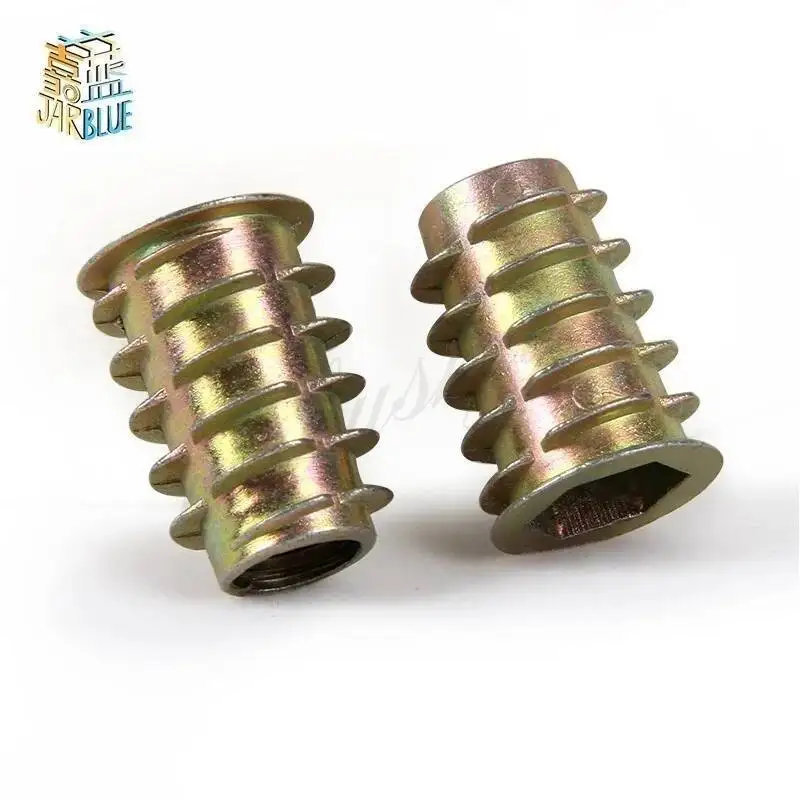
Zinc Alloy Flanged Hex Drive Wood Insert Nut Assortment
Official Store Deal
Expert Analysis Overview
Structural Integrity for Heirloom Repairs
Zinc alloy wood insert nuts are precision-engineered fastening solutions designed for creating repeatable, high-strength threaded connections in timber and composite wood materials. These components represent a significant advancement over standard wood screws, especially for pieces requiring periodic disassembly or those subjected to high mechanical stress. The coarse external threads cut deep into the wood grain, creating a mechanical bond that resists pull-out far better than traditional fasteners. Wood stays intact.
Reliability remains paramount in furniture restoration. These inserts allow for the use of machine bolts in wood, effectively turning a wooden joint into a metal-to-metal connection once installed. This transition is essential for legs, table tops, and knock-down furniture where seasonal movement or frequent use usually leads to stripped holes. The yellow zinc finish provides a period-accurate aesthetic, mimicking the brass-toned Hardware found in many nineteenth-century cabinet designs while offering modern corrosion resistance.
Zinc Alloy and the Question of Longevity
The material composition of these inserts is a die-cast zinc alloy. Zinc offers a unique balance between weight and durability. While it lacks the extreme tensile strength of hardened steel, it provides superior resistance to atmospheric oxidation. This makes it ideal for furniture used in humid environments or varying climates. It doesn't rust. The metal is dense. Unlike cheap plastic anchors, these alloys don't become brittle over time.
From a restoration perspective, the alloy's ability to accept a patina is a hidden benefit. While the initial yellow-chromate plating is bright, it dulls over decades of service, blending into the surrounding timber. This aging potential ensures that repairs performed today won't stand out as glaringly modern updates in fifty years. The casting is clean. Threads are sharp. The internal machining is consistent across the M4 through M10 size range.
The Mechanics of the Flanged Hex Drive
Each nut features a flanged head and an internal hex drive. The flange serves a dual purpose. First, it acts as a depth stop, ensuring the insert sits flush with the surface of the wood. This prevents the fastener from being driven too deep, which could cause the wood to split or the bolt to fail to reach the threads. Second, the flange provides a larger bearing surface, distributing the load of the bolt more evenly across the wood face. It stops perfectly.
Installation requires an Allen key or hex bit. This hex drive interface allows for significantly more torque than a flat-head or Phillips screwdriver slot. High torque is necessary when driving the large-diameter external threads into hardwoods like white oak or maple. The hex socket is deep. It resists stripping. Because the drive is internal, the fastener maintains a low profile that can be easily hidden under wood plugs or decorative caps if a completely invisible repair is required.
Coarse Threading and Grain Retention
The external thread profile is intentionally aggressive. These are not standard machine threads; they are designed specifically to displace wood fibers and lock into the cellular structure of the timber. In softwoods like pine or cedar, these threads compress the surrounding material, creating a high-density zone that increases the nut's holding power. In hardwoods, the sharp leading edge of the thread cuts a clean path, minimizing internal stresses that could lead to checking or cracking.
Fitment is exceptionally tight. Once seated, the nut becomes an integral part of the piece. The vibration resistance offered by this mechanical interlock is far superior to friction-based fasteners. This is the professional choice. For the restoration specialist, this means the difference between a table leg that wobbles after a year and one that remains rock-solid for a generation.
Sizing the Solution: From M4 to M10
The availability of sizes ranging from M4 to M10 covers nearly every application in the furniture world. The M4 and M5 variants are perfectly suited for cabinet pulls, small decorative brackets, and lightweight trim. These smaller sizes allow for delicate work without the risk of splitting thin drawer fronts. The M6 and M8 sizes are the workhorses of the industry, ideal for chair seats, table aprons, and bed frames. They handle weight.
For heavy-duty structural applications, the M10 inserts provide massive surface area and thread engagement. These are the go-to for workbench construction or large dining table pedestals. Having an assortment on hand allows the craftsman to match the hardware to the specific density and thickness of the wood being serviced. Proper sizing is critical. A smaller insert in a large hole is useless, while an oversized insert can ruin a delicate antique frame.
Installation Tactics for the Discerning Builder
Success with these inserts depends entirely on the preparation of the pilot hole. A hole that is too small will cause the zinc alloy to snap under torque, especially in hardwoods. Conversely, a hole that is too large will result in a weak connection that pulls out under load. Most restoration projects require a tiered drilling approach where a larger diameter is cleared for the flange and a narrower, deeper hole is prepared for the body. Accuracy is mandatory.
Using a drill press is highly recommended to ensure the hole is perfectly perpendicular to the surface. If the insert goes in at an angle, the bolt will never align correctly with the mating piece. A small amount of wax or dry lubricant on the external threads can assist with the drive in stubborn hardwoods. The process is tactile. You feel the bite. The result is a clean, professional finish that elevates the overall quality of the build.
Aesthetic Compatibility with Period Furniture
Restoring furniture from the late 1800s often presents a challenge in finding hardware that doesn't look like it came from a big-box hardware store. These zinc alloy nuts, with their yellowish hue, integrate well with the darker finishes of mahogany, walnut, and cherry. They don't flash. The color is subtle. Even if the hardware is visible on the underside of a piece, it suggests a level of craft and permanence that bright silver zinc or black oxide fasteners lack.
This material choice respects the history of the object. While the use of threaded inserts wasn't common in the mid-century, using them for structural reinforcement is a modern intervention that prioritizes the preservation of the wood over dogmatic adherence to outdated fastening methods. It protects the timber. It ensures the piece remains functional for another century.
The Long-Term Value of Mechanical Fastening
Investing in a set of 10 to 50 pieces is a logistical necessity for any serious workshop. Running out of a specific size mid-project leads to compromises that ultimately degrade the final product. By standardizing on these hex-drive inserts, the restorer ensures that every repair is a permanent upgrade. The cost-per-use is negligible compared to the time saved in future repairs. It is an insurance policy.
Imagine finishing a complex restoration and knowing that every joint is held together by clean, mechanical threads that will never strip. The satisfaction of a bolt tightening smoothly into a hidden metal housing is a hallmark of quality. These inserts provide that confidence, turning every project into a piece of engineered art that stands the test of time and use.